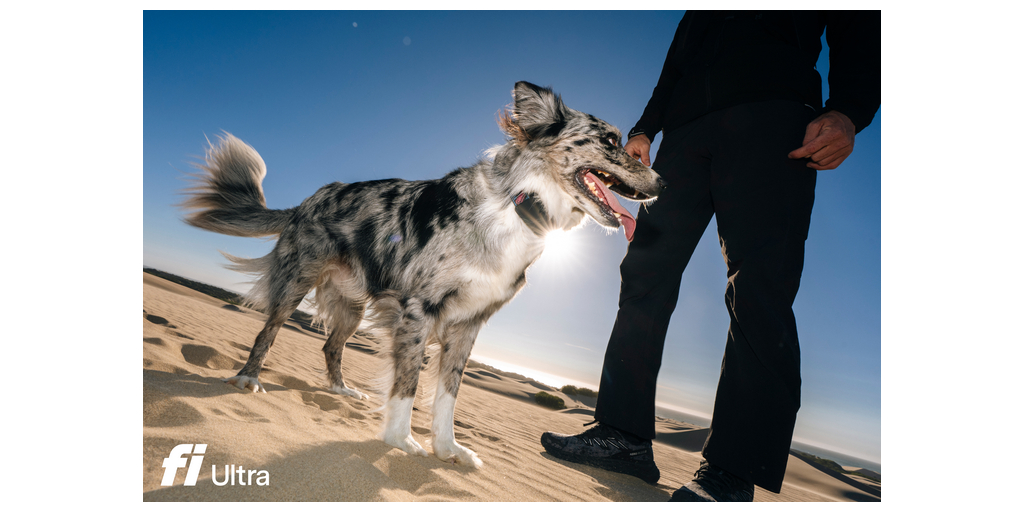

HAWTHORNE, Calif. — SpaceX's Starlink network just reached a new kind of customer: the family dog. Smart pet-technology company Fi has launched the Fi Ultra, which it bills as the world's first consumer wearable outside of a smartphone to run on Starlink's direct-to-cell satellite service — a milestone that pushes SpaceX's orbital connectivity into everyday consumer hardware.
The pitch solves a problem every dog owner knows. Traditional GPS trackers rely on ground-based LTE towers, so the moment a pet bolts past the last tower, the tracker goes dark. Fi Ultra sidesteps that by tapping the same Starlink direct-to-cell constellation that SpaceX has been rapidly expanding, letting owners follow their dog in real time almost anywhere in the U.S., including areas with no cellular coverage at all.
How It Works
The collar layers T-Satellite — T-Mobile's implementation of Starlink Mobile — on top of LTE, Wi-Fi and Bluetooth, and switches between the four modes automatically with no input from the owner. It pairs that with dual-band, high-accuracy GPS that stays on continuously rather than only when a dog leaves a safe zone, plus a training feature called Fi Callback that uses sound and vibration rather than static shock. Battery life runs to multiple days per charge, managed by software that conserves power when a dog is home or asleep and ramps everything up the moment one goes missing.
SpaceX has launched more than 650 direct-to-cell satellites that each behave like a cell tower in orbit, communicating with ordinary LTE devices on the ground — no dish or special antenna required. That same constellation underpins SpaceX's sweeping Starlink expansion plans, and the Fi Ultra shows how those satellites can power products far beyond phones and routers.