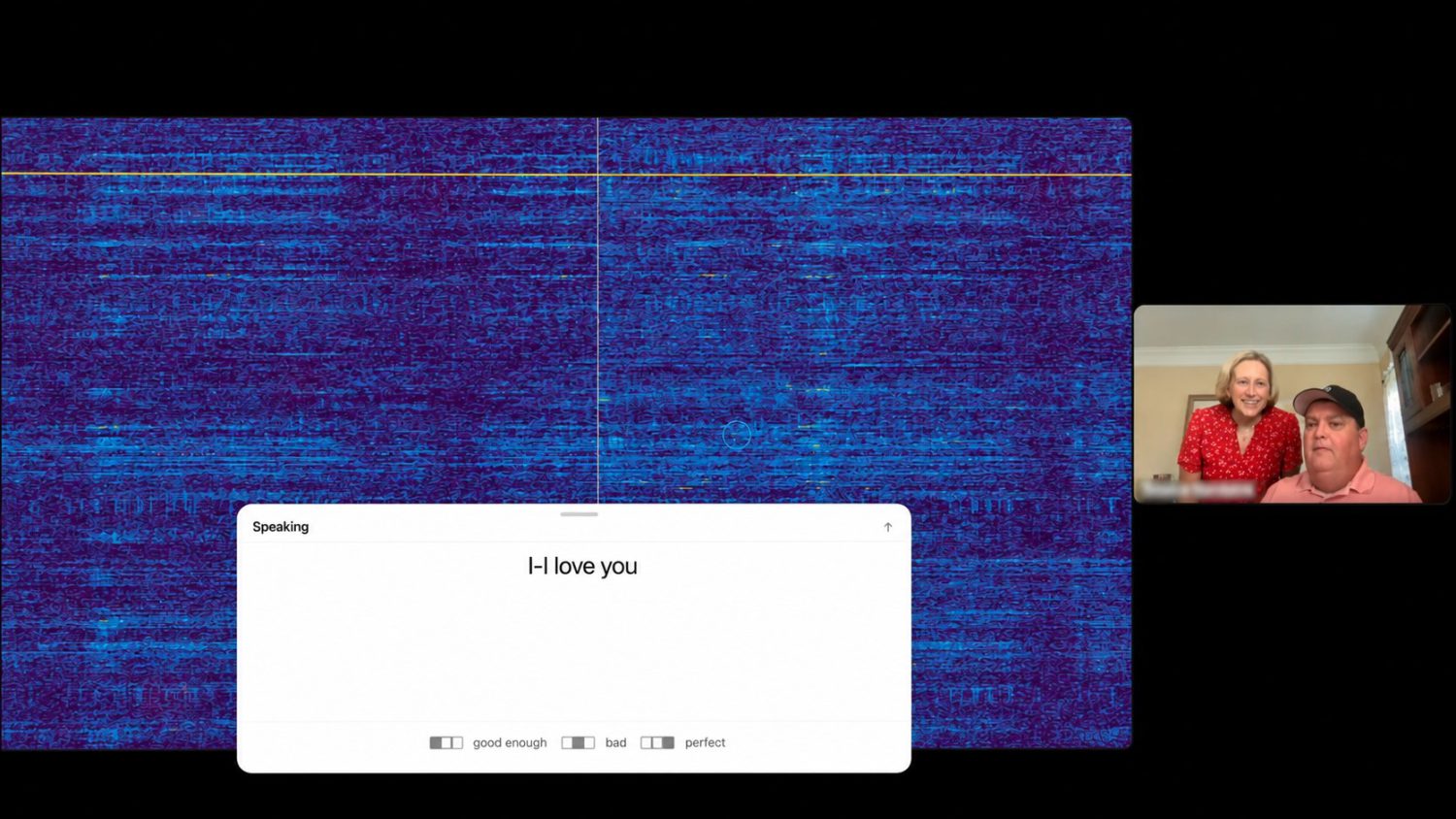
FREMONT, Calif. — For the first time, a person who had lost the ability to speak has held a conversation using nothing but their thoughts — decoded in real time by a Neuralink brain implant and played back in a recreation of their own voice.
The milestone comes from Neuralink's VOICE study, a clinical trial focused on restoring communication to people with severe speech impairment. The participant, a young man living with ALS, received the company's wireless N1 implant and, during a demonstration, produced audible words simply by imagining speech. "There we go. I'm talking to you with my mind," he said — a line that captures just how far brain-computer interfaces have come, and how quickly Neuralink's community of implant recipients is growing.
How It Works
The N1 device reads the neural activity associated with intended speech and hands it to an AI model that reconstructs words — then renders them aloud using voice samples captured before the patient's illness progressed. The result is not just text on a screen but speech in something close to the person's own voice, restoring not only communication but a piece of identity.
A Leap Beyond the Lab
Academic labs have decoded speech from brain signals before, but typically with tethered, partly external hardware. Neuralink's distinction is a fully wireless, fully implanted system — one designed to eventually scale to thousands of patients rather than a handful of research subjects. The device has already received the FDA's Breakthrough Device Designation, a signal that regulators see the potential and want to speed it along.