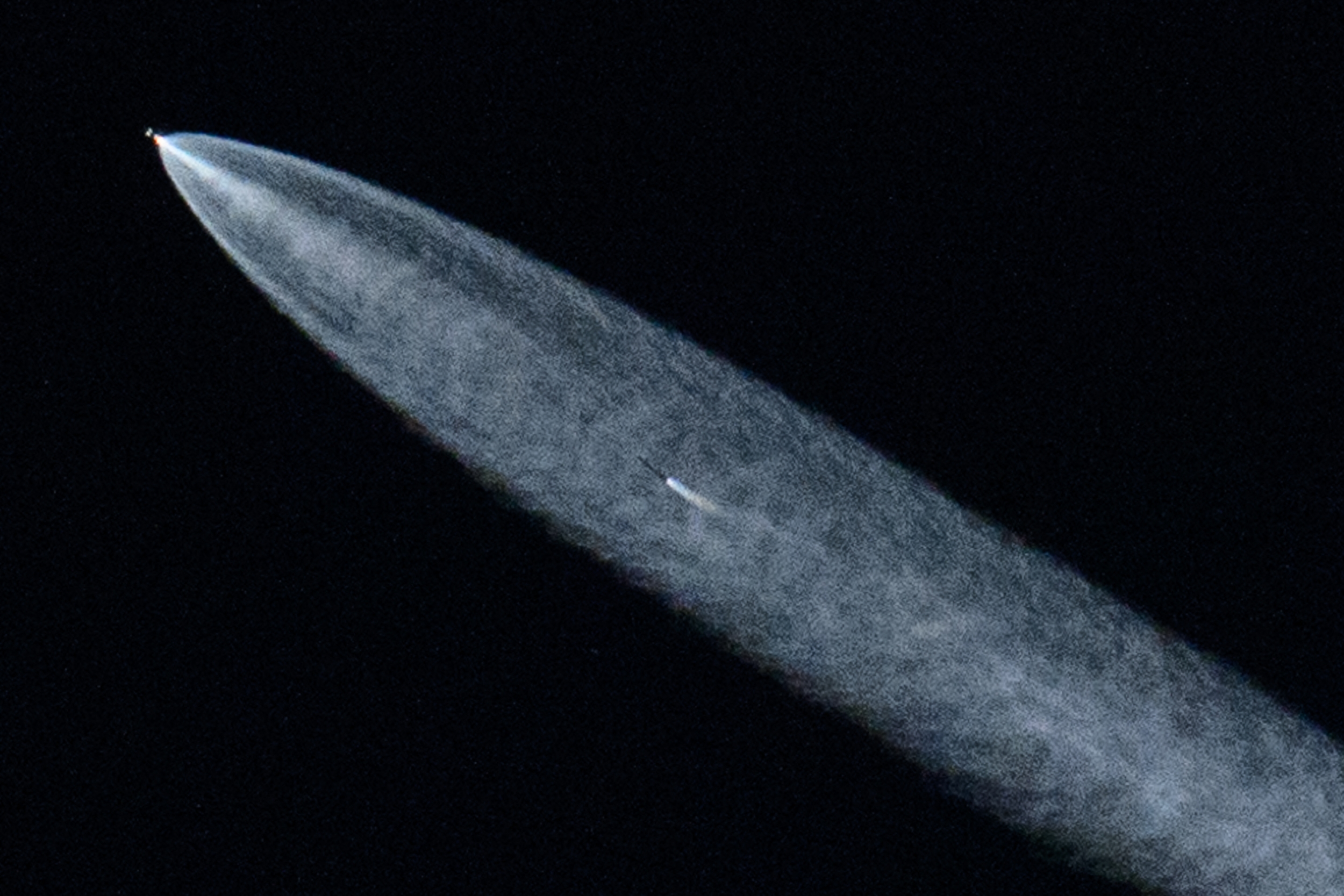
HAWTHORNE, Calif. — Three days after completing the largest initial public offering in Wall Street history, SpaceX carried out its first orbital launch as a publicly traded company on Monday, June 15 — and did it the way the company has made routine: quietly, precisely, and on schedule. A Falcon 9 carrying 24 Starlink satellites lifted off from Space Launch Complex 4E at Vandenberg Space Force Base in California at 11:34 a.m. ET, placing the constellation's 1,500th satellite of 2026 into low Earth orbit.
The timing was hard to miss. On the same day the mission flew, SpaceX stock climbed past $180 on the Nasdaq, extending a rally that had already added hundreds of billions in market value since shares first traded on June 12. The two events together captured the case SpaceX is making to investors: that industrialized launch and a thriving satellite-internet business are not two stories, but one.
A Pace That Redefines the Industry
SpaceX launched its first 60 Starlink satellites in May 2019. Reaching 1,500 in a single calendar year — with half the year still to go — is not a continuation of past trends but a leap beyond them. Through the first half of 2026, the company averaged roughly one dedicated Starlink launch every three to four days, each Falcon 9 carrying batches of 24 to 29 satellites.
Every one of those missions flew on a booster that had already been to orbit and back. Just over a week earlier, the fleet leader completed a record 35th flight — a reuse count that would have seemed impossible when SpaceX first landed a booster intact in 2015.