
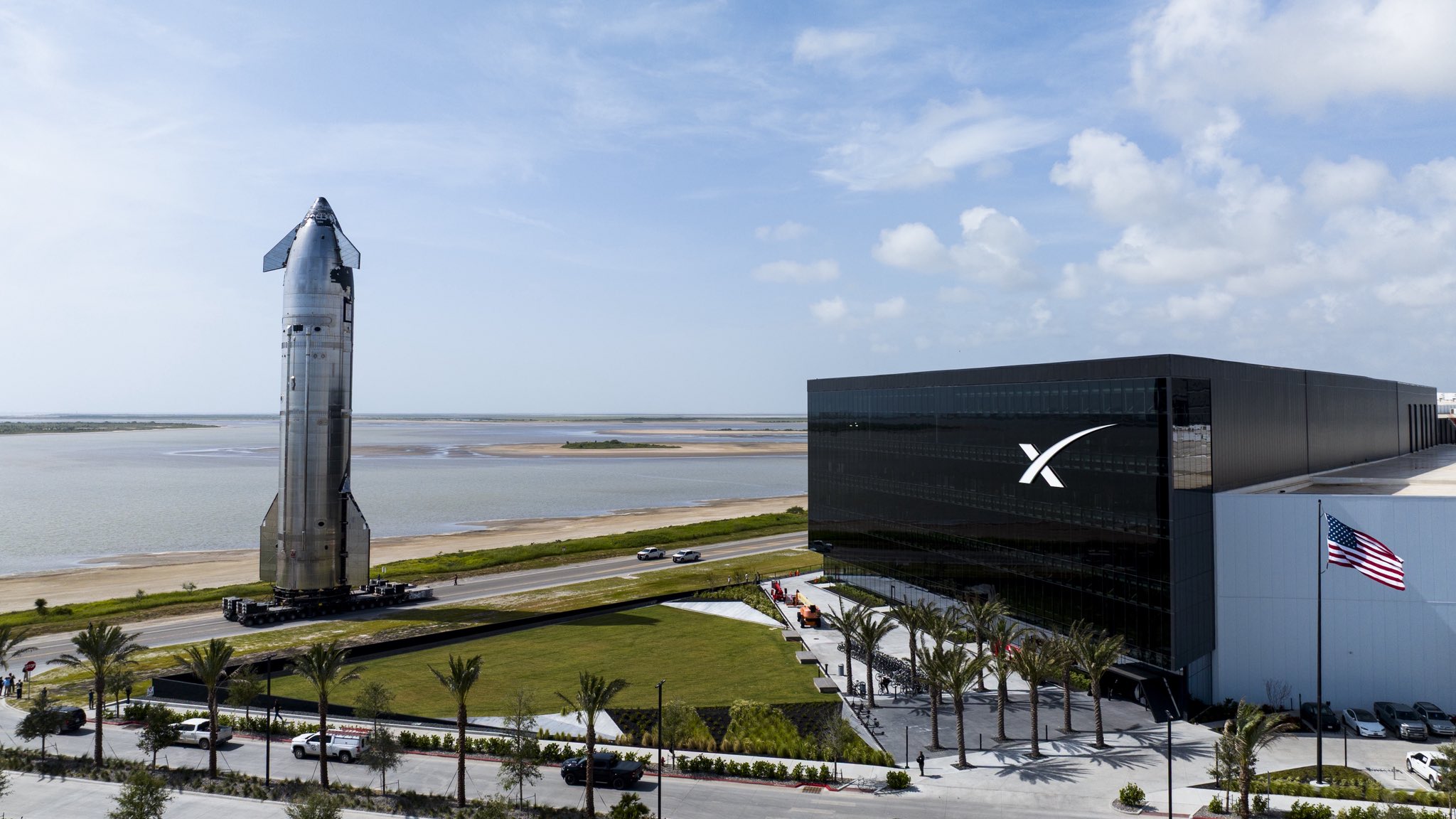
SpaceX Turns Its Compute Muscle Into an AI Powerhouse

Once known for rockets and Starlink, SpaceX now runs gigawatt-scale AI clusters and leases them to the industry's biggest names, with orbital data centers next on the roadmap.

3 min read
SpaceX Turns Its Compute Muscle Into an AI Powerhouse

HAWTHORNE, Calif. — SpaceX built its name on reusable rockets and a satellite internet network that spans the planet. In 2026, it is quietly becoming something else entirely: one of the most important artificial-intelligence infrastructure companies in the world.

The transformation accelerated when SpaceX absorbed Elon Musk's xAI under the SpaceXAI banner earlier this year in a roughly $1.25 trillion combination, folding Grok's development directly into the same company that builds Starship and Starlink. The result is a business that now spans launch, connectivity, and frontier AI compute under a single roof — and, increasingly, a single ticker.

A Compute Landlord at Gigawatt Scale

At the center of the effort are SpaceX's Colossus supercomputing clusters in Memphis, Tennessee, which operate at gigawatt scale and rank among the largest coherent AI training systems ever assembled. Rather than reserve all that horsepower for internal Grok training, SpaceX has aggressively leased it out.

The customer list reads like a who's-who of the AI race. Anthropic is reported to pay on the order of $1.25 billion a month for access to more than 220,000 GPUs, while Google is said to lease roughly 110,000 GPUs for around $920 million monthly, with additional deals such as Reflection AI layered on top. Those arrangements alone are projected to throw off tens of billions of dollars in annual revenue — a stream that increasingly rivals SpaceX's traditional launch and Starlink businesses, echoing the demand behind its server order that sent Super Micro sharply higher.

SpaceX Turns Its Compute Muscle Into an AI Powerhouse — additional image

The Orbital Data Center Ambition

SpaceX is not stopping at the ground. Musk has argued for years that the limits on AI scaling — power, land, cooling — are ultimately solved in space, and the company has floated a "Starmind" concept of thousands of AI-optimized satellites drawing on abundant solar energy and radiating heat into the vacuum.

If realized, orbital data centers would let SpaceX bypass the terrestrial constraints that increasingly bottleneck rivals, using Starlink's low-latency mesh to move data between space-based compute and Earth. It is the kind of vertically integrated bet — launch, power, network, and silicon — that no competitor can easily match, and it dovetails with the company's talks to supply the Pentagon with AI computing.

Why It Matters Now

The appetite for headlines around SpaceX's buildout is so intense that Musk spent part of this week batting down an unverified report of a $52 billion GPU order, calling it "fake news." Yet even setting rumors aside, the confirmed footprint is enormous and growing.

As SpaceX moves toward the public markets, that AI layer reframes the entire investment case. This is no longer just a rocket company with a broadband arm; it is a launch provider, a satellite operator, an AI lab, and a hyperscale compute host at once. If the orbital compute vision lands anywhere close to plan, SpaceX could end up dominating not only the road to orbit but a meaningful slice of the intelligence economy that runs on it.