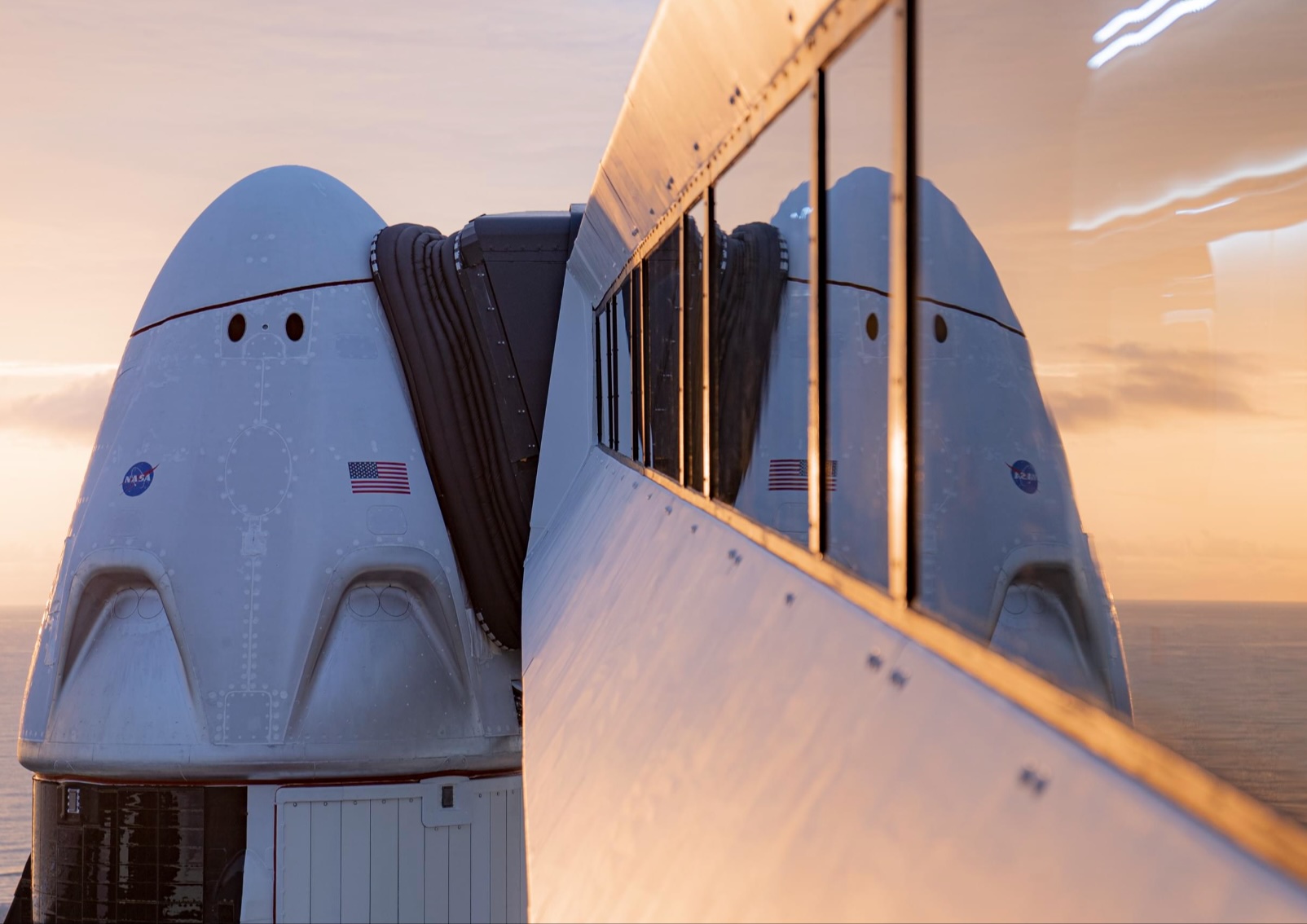
The Five Fastest U.S. Trips to the ISS Are Now All SpaceX Dragons

With Crew-13's record 7-hour, 55-minute docking, SpaceX now owns every one of the five fastest launch-to-docking trips by a U.S. spacecraft to the International Space Station.

3 min read
The Five Fastest U.S. Trips to the ISS Are Now All SpaceX Dragons

HAWTHORNE, Calif. — SpaceX has quietly swept a record board that no other American spacecraft can touch: the five fastest launch-to-docking trips ever made by a U.S. vehicle to the International Space Station are now all Dragon flights.

The latest entry came from Crew-13, which reached the station in just 7 hours and 55 minutes, docking at 7:05 p.m. ET on October 1. NASA called it "the fastest launch-to-docking of a U.S. spacecraft in the history of the International Space Station" — and it was not close. The previous U.S. record belonged to SpaceX's own CRS-31 cargo run at just over 12 hours in November 2024, while the prior crewed mark, Crew-11, took 14 hours and 43 minutes in August 2025.

A Clean Sweep

Put together, the numbers tell a striking story of dominance. Every rung on the ladder of fastest American trips to the ISS is occupied by a Dragon — crewed and cargo alike — a reflection of how thoroughly SpaceX has refined the vehicle since its first station visits. Each flight shaves time through a combination of precise launch timing, optimized orbital phasing, and the autonomous rendezvous software that lets Dragon close the gap with the station efficiently.

For the four astronauts aboard Crew-13 — NASA's Jessica Watkins and Luke Delaney, the Canadian Space Agency's Joshua Kutryk, and Roscosmos cosmonaut Sergey Teteryatnikov — the payoff was a dramatically shorter stay in the cramped capsule before reaching the station's roomy interior. SpaceX had signaled the attempt in advance, targeting a record-fast docking on launch night, and delivered.

The Five Fastest U.S. Trips to the ISS Are Now All SpaceX Dragons — additional image

Why Speed Matters

A faster trip is more than a bragging right. Compressing the journey reduces the time crews spend confined in the capsule, trims the window in which anything can go wrong before docking, and demonstrates the kind of operational precision that underpins SpaceX's broader ambitions. The same mastery of autonomous rendezvous and docking that sets ISS records is foundational to the company's plans for routine, high-cadence spaceflight — the thesis analysts have pointed to in valuing the business.

The Workhorse Keeps Winning

Dragon was once the newcomer trying to prove itself against decades of spaceflight heritage. Today it is the benchmark. As NASA's own tally confirms, detailed in Teslarati's report on the milestone, the question is no longer whether Dragon can keep pace with past American spacecraft — it is how much faster the next flight will go.

With Crew-13 safely aboard and the record books rewritten, SpaceX has once again turned a routine crew rotation into a demonstration of just how far ahead its workhorse capsule has pulled.

Stay Up to Date on All Things Elon

Get the most interesting Elon Musk stories straight to your inbox, once a day. Short, interesting and relevant!