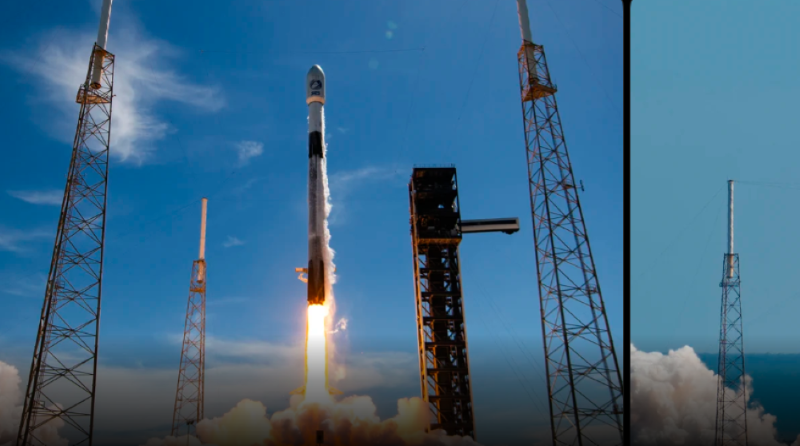

HAWTHORNE, Calif. — SpaceX kept its relentless launch rhythm going this week, sending 27 Starlink satellites to orbit atop a Falcon 9 first stage making its 35th flight — one of the most-flown boosters in the company's fleet and a fresh reminder of how far rocket reusability has come.
A Veteran Booster Keeps Delivering
The rocket lifted off from Vandenberg Space Force Base in California at 4:42 a.m. EDT on September 2, carrying its Starlink payload to low Earth orbit. The first stage, known as Booster 1063, is now just two flights shy of SpaceX's reuse record of 37, a mark set only last week by a sister booster — a milestone we covered when a Falcon 9 first stage notched its record 37th launch.
Roughly eight and a half minutes after liftoff, Booster 1063 landed on the drone ship Of Course I Still Love You in the Pacific, all but guaranteeing it will fly again. The upper stage then deployed all 27 satellites about 62 minutes into the mission, adding to the largest satellite network ever assembled — a constellation that now numbers more than 11,000 active spacecraft.
An Unmatched Cadence
The flight was SpaceX's 102nd Falcon 9 mission of 2026, with 79 of those dedicated to expanding Starlink. That pace dwarfs the rest of the global launch industry combined and reflects the operational maturity of a vehicle SpaceX has turned into something closer to an airliner than a traditional rocket. Alongside the Falcon 9 workhorse, the company has flown two Falcon Heavy missions this year and continued test flights of Starship, the vehicle meant to eventually take over the heavy lifting, as detailed on SpaceX's official launch pages.