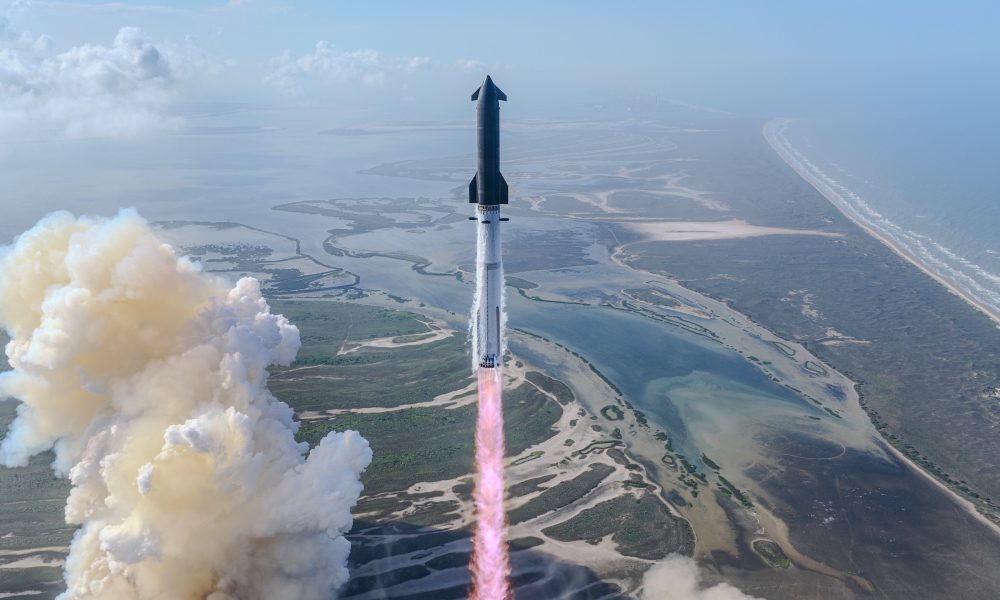
BOCA CHICA, Texas — SpaceX has set a target for its next Starship launch, and this one carries a first. Flight 13 is aiming to lift off as early as Wednesday, July 15, with SpaceX pointing to a 90-minute window opening at 5:45 p.m. CT on Thursday, July 16, from Starbase in South Texas, and it is slated to attempt the debut deployment of the company's next-generation Starlink V3 satellites.
The mission comes roughly seven weeks after Flight 12 flew on May 22, underscoring the accelerating cadence of Starship's development campaign. It will fly the latest Version 3 hardware, with 33 Raptor 3 engines on Super Heavy Booster 20 and six on the Ship 40 upper stage, SpaceX confirmed via Teslarati.
A First for Starlink
The headline objective is the deployment of 20 next-generation Starlink V3 satellites, the first time the new design will fly on an operational test. The V3 satellites feature advanced laser links for inter-satellite communication, deployable solar arrays, and onboard cameras, six of which will capture imagery of Starship's heat shield during flight.
The demonstration will be brief, since the satellites share Starship's suborbital trajectory and will reenter after a handful of minutes, but it is a meaningful step toward the day Starship begins deploying the massive V3 constellation at scale. That ambition dovetails with SpaceX's recent filing to expand Starlink to as many as 100,000 satellites, a build-out Starship is being designed to enable.
Testing the Hard Parts
Beyond the satellite deploy, Flight 13 is packed with engineering objectives. Several heat shield tiles on Ship 40 have been painted white to serve as imaging targets, while additional experiments will test upgraded tiles on the aft flaps, modified attachments on the aft skirt, and load-sensing tiles that measure structural stresses. The upper stage will also attempt a single Raptor engine relight in space before a targeted splashdown in the Indian Ocean.
These tests build directly on lessons from Flight 12, which introduced the V3 configuration but encountered a booster maneuvering anomaly and an engine-out event. Hardware and software changes on Booster 20 and Ship 40 are aimed at improving engine relight reliability, startup sequencing and overall robustness, the same objectives SpaceX outlined when it detailed Flight 13's push toward orbital refueling.
Toward Routine Spaceflight
The short interval between Flights 12 and 13 highlights SpaceX's iterative approach, testing, learning and flying again in weeks rather than months. Elon Musk has said Starship launches will become "incredibly common," with the company envisioning cadences that could eventually approach one launch per hour.
Success on July 16 would move Starship V3 closer to full reusability and the recovery of both stages back at Starbase, and it would put the first next-generation Starlink satellites in the sky, another concrete step toward the constellation's next chapter.