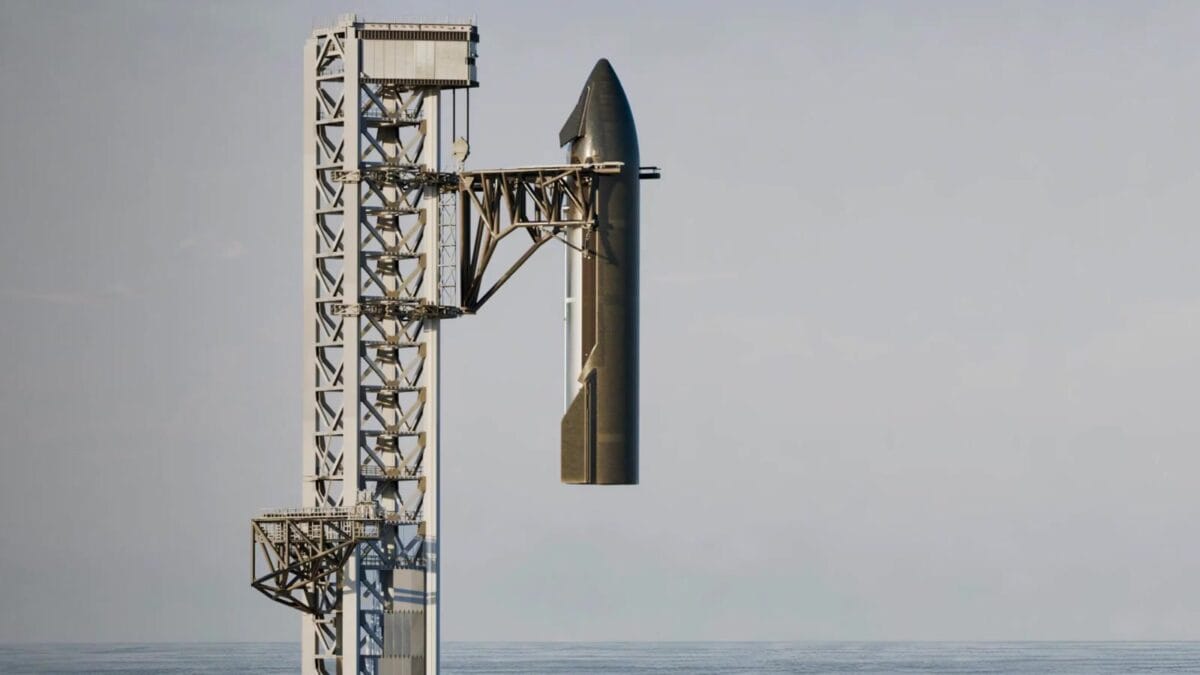
BOCA CHICA, Texas — SpaceX has laid out the full mission profile for Starship's upcoming Flight 15, a sequence that would send the ship to orbit for roughly 21 hours, deploy a batch of next-generation Starlink satellites, and end with the vehicle returning to the Starbase launch tower for its first-ever catch.
The plan, described in a SpaceX mission update, turns Flight 15 into far more than a test of the catch maneuver. It bundles an orbital-duration demonstration, an operational payload deployment, and a precision return into a single ambitious flight — part of the broader double-catch campaign SpaceX now has in motion.
A Full Day in Orbit
After launch, the ship would spend about 21 hours circling the Earth before beginning its return. That extended coast is itself a milestone, giving SpaceX time to check the vehicle's systems through multiple orbits and to validate how Starship behaves on a longer-duration flight. The company has steadily stretched its test objectives, and a near-day in orbit marks a clear step up from earlier suborbital hops.
Holding the vehicle in orbit for that long also exercises the systems a future operational Starship will lean on constantly — power, thermal control, and attitude management — under real spaceflight conditions rather than in a brief arc.
Starlink V3 and a Look at the Heatshield
During the flight, Starship would deploy a set of Starlink V3 satellites, the generation promising a roughly tenfold jump in capacity. Three of those satellites are modified to photograph Starship's heatshield, giving engineers an outside view of the tiles that protect the vehicle during the fiery return through the atmosphere.
