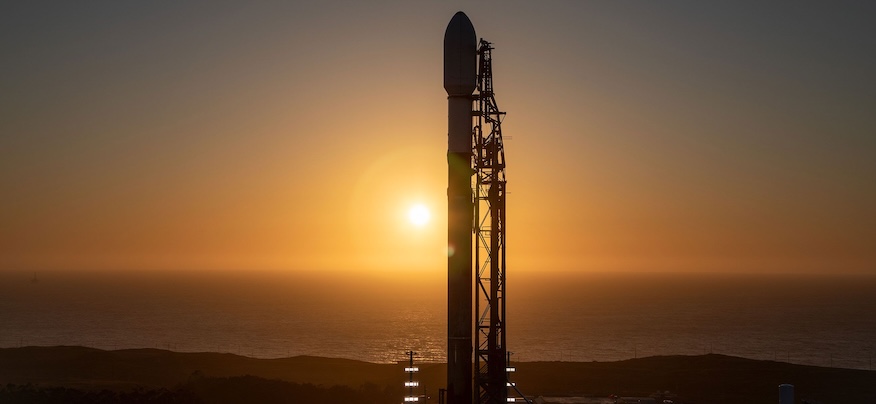
HAWTHORNE, Calif. — SpaceX opened the second half of 2026 the same way it dominated the first, sending a Falcon 9 rocket climbing over the Pacific with another batch of Starlink satellites and pushing its reusable fleet toward yet another milestone.
The Starlink 17-46 mission lifted off from Space Launch Complex 4 East at Vandenberg Space Force Base on Wednesday evening, adding 24 broadband satellites to a constellation that now numbers more than 10,700 spacecraft. It capped a first half in which SpaceX launched nearly 1,600 satellites and cemented Starlink as the largest satellite network ever assembled.
A Workhorse Booster Returns
The mission flew on Falcon 9 first stage B1100, making its seventh trip to space after previously lofting the NROL-105 national security mission and five earlier Starlink batches. About eight minutes after liftoff, the booster targeted a touchdown on the drone ship Of Course I Still Love You, stationed in the Pacific.
If successful, the landing marked the 207th recovery on that vessel and the 632nd booster landing in SpaceX history, a running tally that underscores just how routine rapid reuse has become. Each recovered stage trims cost and turnaround time, feeding a cadence no competitor has matched.
