Starlink In-Flight Wi-Fi Expands to 48 Airlines as Lufthansa Rolls Out

SpaceX's Starlink aviation business now spans 48 airlines and more than 7,000 aircraft, with Lufthansa Group beginning a 850-plus-plane rollout that offers free gate-to-gate connectivity.

3 min read
Starlink In-Flight Wi-Fi Expands to 48 Airlines as Lufthansa Rolls Out

HAWTHORNE, Calif. — SpaceX's push to blanket the skies with low-latency internet reached a new altitude this week, as Starlink's in-flight Wi-Fi service expanded to 48 airlines worldwide and Lufthansa Group flew its first Starlink-equipped commercial flight.

Under contracts now covering more than 7,000 aircraft, Starlink Aviation has grown from a niche offering into one of the fastest-scaling connectivity businesses in the industry. The service promises passengers streaming-grade speeds and video-conferencing-capable latency, delivered by the same low-Earth-orbit constellation that recently surpassed 11,000 Starlink satellites in orbit. United Airlines, an early adopter, says its equipped aircraft can reach speeds of up to 250 Mbps.

Lufthansa Goes All In

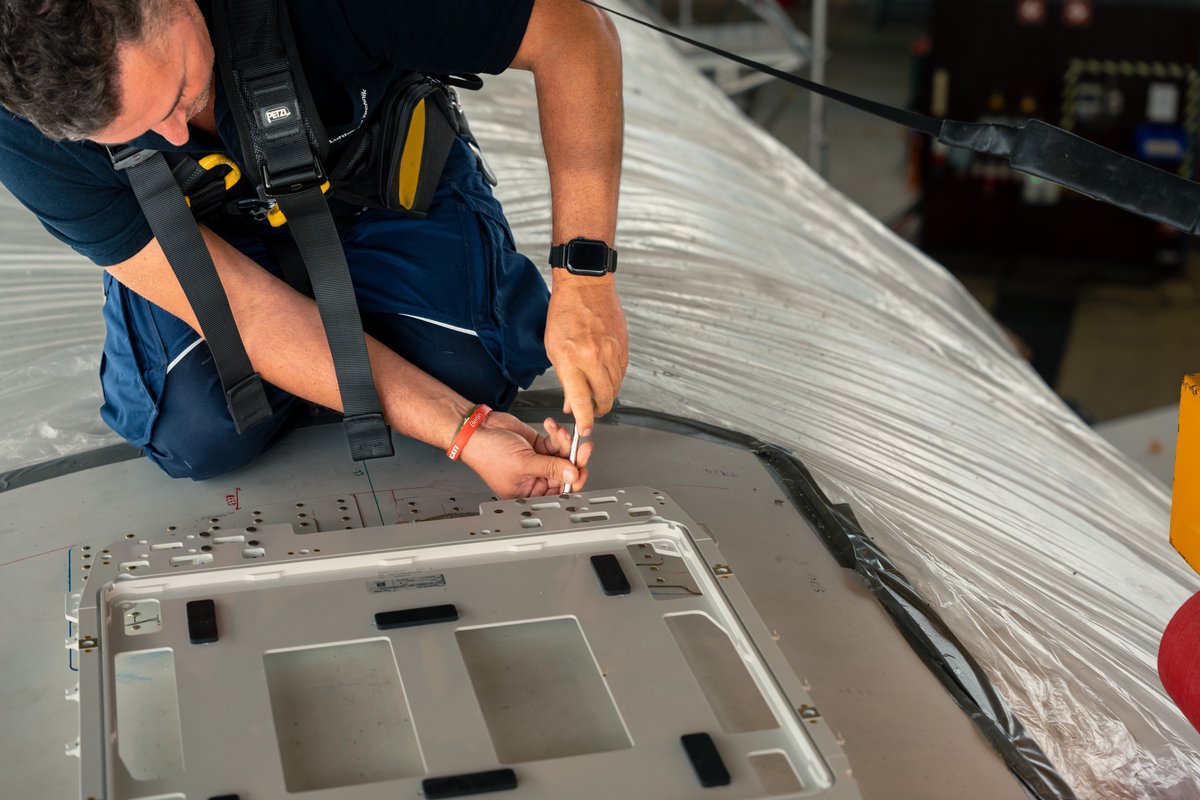
The centerpiece of the week was Lufthansa Group, which began deploying Starlink across a fleet of more than 850 aircraft spanning ten airlines — Lufthansa, SWISS, Austrian Airlines, Brussels Airlines, Eurowings, Discover Airlines, Air Dolomiti, Edelweiss, Lufthansa CityLine and ITA Airways. The inaugural Starlink-equipped flight operated on August 19 aboard an Airbus A320neo, with fleet-wide coverage targeted by 2029.

It is one of the largest single commitments in Starlink Aviation's history, and a category shift for a European airline family that had long standardized on legacy geostationary satellite providers. Just as significant for travelers: Lufthansa will offer the connectivity free of charge to loyalty members and Travel ID account holders across every cabin, effectively removing the paywall that has defined inflight Wi-Fi for years.

Starlink In-Flight Wi-Fi Expands to 48 Airlines as Lufthansa Rolls Out — additional image

Why Airlines Are Switching

The appeal comes down to physics. Starlink's satellites orbit far closer to Earth than the geostationary systems airlines have historically used, cutting latency to levels that make real-time video calls and cloud work practical at 35,000 feet. Carriers report that onboard bandwidth can, in many cases, exceed typical home or office broadband — a claim SpaceX has repeatedly demonstrated in the field.

For SpaceX, aviation is a high-margin complement to its consumer and maritime Starlink businesses and a showcase for the constellation's growing capacity. The company's roadmap to a next-generation, 100,000-satellite Starlink network is designed to keep pace with exactly this kind of surging demand.

A Widening Lead

With 48 airlines signed and thousands of aircraft in the installation pipeline, Starlink has effectively rewritten the competitive map for inflight connectivity, leaving legacy Ku-band providers scrambling to respond. Royal Air Maroc recently became the first African carrier to commit its full fleet, underscoring how quickly the footprint is spreading beyond the United States and Europe.

The next milestones to watch are real-world performance reports from Lufthansa's first flights and the pace of retrofits across its maintenance bases. For now, the trajectory is clear: as detailed on SpaceX's official Starlink pages, the company is turning high-speed satellite internet into a standard amenity in the sky — one airline fleet at a time.