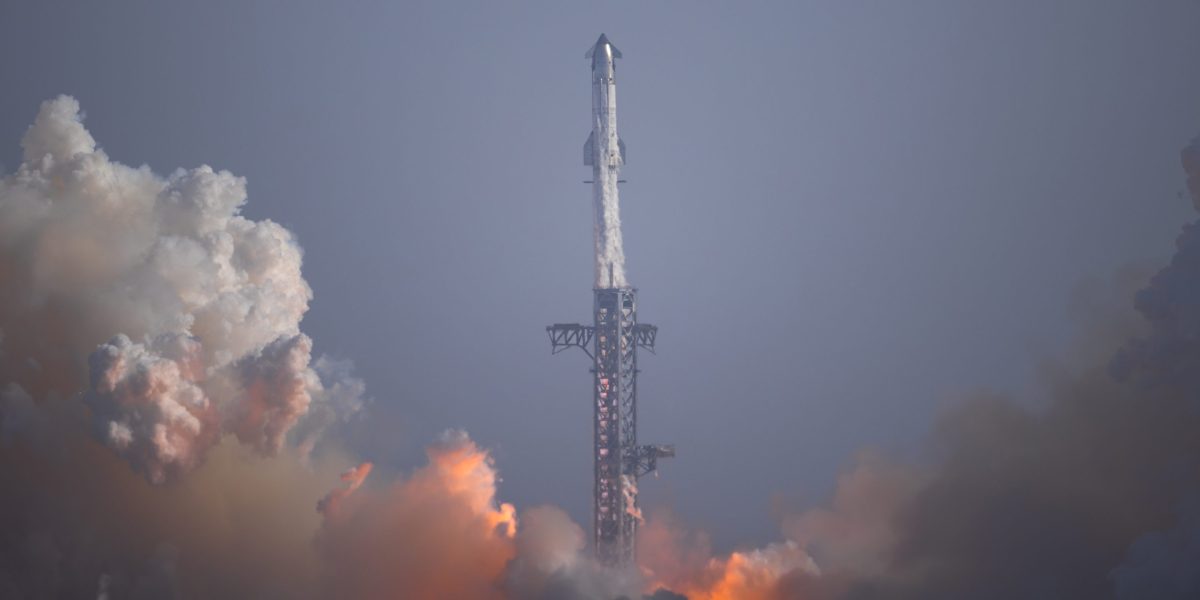
BOCA CHICA, Texas — SpaceX's Starship completed its best reentry yet on Flight 13, with the upper stage hovering upright over the Indian Ocean before settling into the water so gently that it stayed afloat as the webcast ended — and returning a trove of heat-shield data that pushes the vehicle closer to full reusability.
The July 24 mission, which SpaceX engineers cheerfully dubbed "lucky flight 13," was the second flight this year of the upgraded V3 vehicle. While the deployment of 20 next-generation Starlink satellites grabbed early headlines, it is the reentry performance that has engineers most excited about what comes next.
The Best Reentry Yet
Previous Starship demonstrations ended with the ship wreathed in flames, rupturing in midair or exploding at splashdown. This time the stainless-steel vehicle descended more than 10,000 miles from its Texas launch site, flipped upright, and lowered itself into the Indian Ocean intact, with only a few flames licking at its skin.
"We got all the heat shield data we needed and then some," Musk wrote on X after the flight. That data is the whole point: SpaceX must prove the heat shield can survive the punishing heat of reentry before it will attempt to fly a ship back to the launch tower for a catch. The launch was covered in detail by Fortune and the Associated Press.
Cameras, Sensors and Painted Tiles
To gather that data, SpaceX turned the mission into a flying laboratory. Six of the newly deployed Starlink satellites carried cameras that photographed Starship's heat shield at flight's end, beaming back remarkably crisp images even as the ship bobbed in the ocean. The shield itself was wired with sensors to measure the extreme pressures of ascent and entry.
In a clever stress test, engineers deliberately painted some thermal tiles white to simulate missing tiles, probing how the shield would hold up with gaps in its armor. The exercise builds directly on the deployment milestone we covered when Starship aced Flight 13 and released its first 20 Starlink V3s, turning a single flight into both an operational and an engineering win.
Toward a Fully Reusable Ship
The reentry success feeds the larger plan. SpaceX has already caught a Super Heavy booster with the giant mechanical arms at Starbase, and it intends to do the same with the ship itself, which is designed to be completely reusable. Rapid reuse is also what will let the company fly the larger V3 Starlink satellites at scale, a pivot underscored when SpaceX closed Falcon 9 bookings past 2028 to concentrate on Starship.
NASA is watching closely, since Artemis III astronauts need Starship to reach orbit and demonstrate reliability before they practice docking with it next year. With Flight 13's data in hand, that timeline just got a meaningful nudge forward.