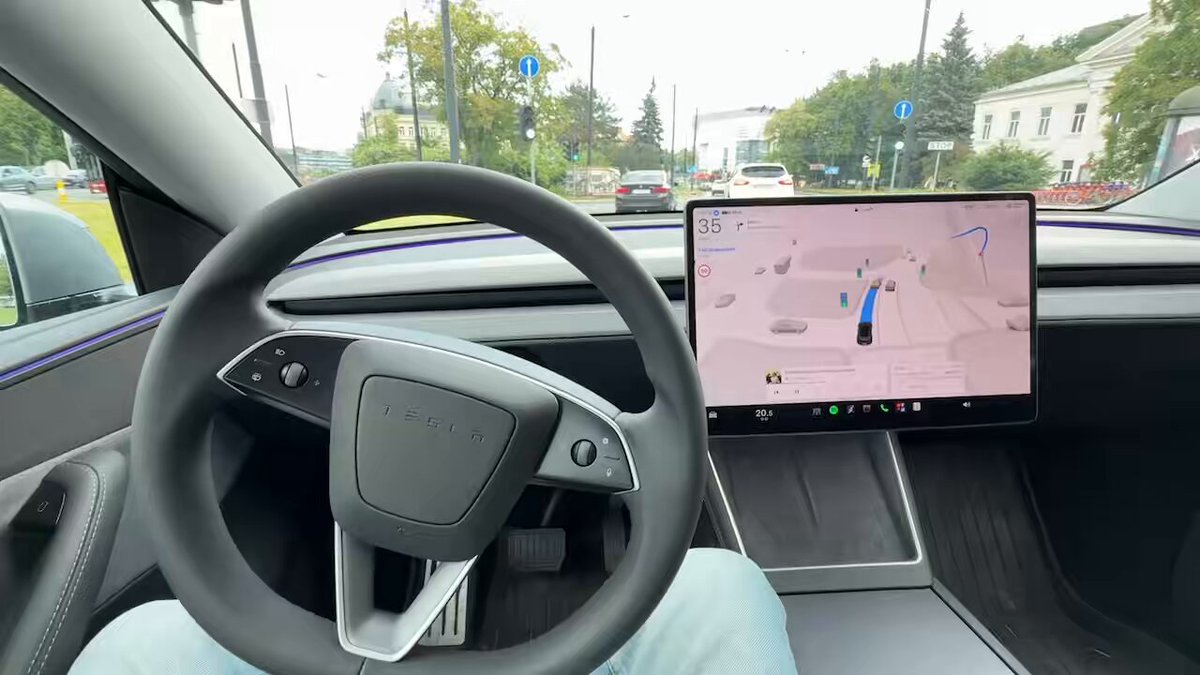
AUSTIN, Texas — Tesla has confirmed that Full Self-Driving (Supervised) now remains active when crossing between any two approved European countries — no manual handover required at the border, as long as both nations have granted regulatory approval for the system. The announcement, confirmed by Tesla Europe on June 11, 2026, represents a meaningful change for owners in the Schengen zone who regularly drive between countries. For years, international travel with driver-assistance systems meant deactivating at each frontier. That constraint is now gone for the five-country approved group.
Which Countries Are Currently Approved
As of June 11, five European countries have granted national regulatory approval for FSD (Supervised): the Netherlands (April 10), Lithuania (May 20), Estonia (May 29), Denmark (June 9), and Belgium (June 11). Belgium's approval — granted by Flanders' Minister of Mobility, Annick De Ridder — was the most recent, completing what has become an accelerating cadence: five approvals in roughly two months. As coverage of Belgium's approval noted, the regulatory pace has been notably faster than many analysts expected when the rollout began in April.
Cross-border FSD is already practically available on routes connecting all five nations. The most natural corridors — Netherlands to Belgium, Belgium to other neighbors, and the Baltic triangle of Lithuania, Estonia, and Denmark — can now be navigated with FSD active throughout, provided both endpoints are in the approved group.
What Happens at the Border
The handover logic is automatic. If you cross from an approved country into another approved country, FSD continues uninterrupted — no notification, no intervention required. If you cross into a country that has not yet been approved, the system disengages and prompts the driver to take manual control. Tesla has confirmed that warning notifications will give ample advance time before the required handover, so drivers will not be caught off-guard mid-motorway.
