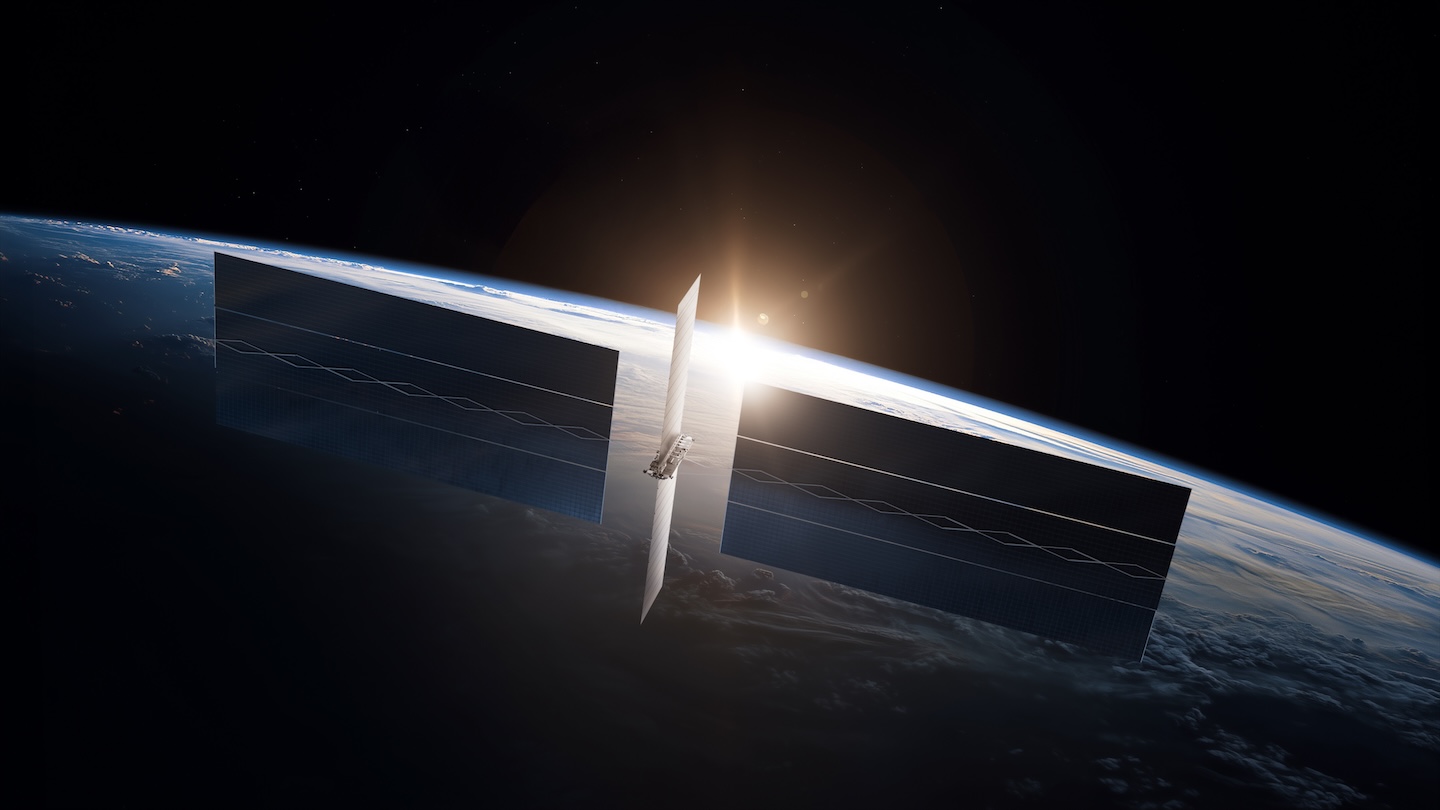
Google Picks SpaceX to Launch Its First Orbital-AI Satellite

Google's first Project Suncatcher satellite — a prototype for running AI in orbit — will fly on SpaceX's Transporter-18 rideshare, targeted for early October.

3 min read
Google Picks SpaceX to Launch Its First Orbital-AI Satellite

HAWTHORNE, Calif. — Google is heading to orbit, and it is booking a ride with SpaceX to get there. The search giant's first Project Suncatcher satellite — a prototype for running artificial intelligence in space — is set to launch on SpaceX's Transporter-18 rideshare mission, with liftoff targeted for early October.

The choice is a notable vote of confidence in SpaceX as the on-ramp for a new category of orbital computing, and it dovetails with Musk's own conviction that the future of AI compute lies above the atmosphere. It also lands as SpaceX, now the corporate home of xAI, presses its case as one of the most valuable companies on the planet.

What Google Is Launching

The Suncatcher prototype, dubbed MVP, is roughly the size of a refrigerator and carries four of Google's Tensor Processing Units. Solar panels supply about one kilowatt of power — enough for the onboard Gemini AI models to run in roughly 15-minute bursts before the satellite must shed heat. To get there, Google says its Trillium-generation TPUs survived vibration testing up to 10 g of sustained load and radiation exposure equivalent to a five-year mission, proving the hardware can take the punishment of spaceflight.

Google frames the launch as a first step, estimating that orbital data centers could become cost-competitive around the mid-2030s once launch prices fall below roughly $200 per kilogram — a threshold that SpaceX's reusable rockets are explicitly built to push through.

Google Picks SpaceX to Launch Its First Orbital-AI Satellite — additional image

SpaceX Is Playing a Bigger Game

While Google tests the waters with a kilowatt-class demonstrator, SpaceX is already thinking in orders of magnitude beyond it. The company's own AI1 satellite is designed to generate about 150 kilowatts — roughly 150 times the power of Google's MVP — and SpaceX has set a target of around one gigawatt of annualized space-based compute by late 2027. That ambition rides on the same relentless AI build-out powering xAI's Colossus supercomputer expansion on the ground.

Musk has been characteristically blunt about where this leads, arguing that 'the amount of compute in space will obviously round up to 100% of all compute.' Launching a rival's orbital-AI prototype is not a contradiction of that vision — it is a reminder that SpaceX intends to be the launch provider for everyone else's ambitions, too.

A Rideshare With Outsized Stakes

Transporter-18 is one of SpaceX's workhorse rideshare flights, the kind that routinely carries dozens of small satellites to orbit at low cost. But the Suncatcher payload gives this one outsized symbolic weight: the moment a hyperscaler like Google starts putting AI accelerators in orbit, the race for space-based computing stops being theoretical. As Teslarati reports, that race is now leaving the ground — and SpaceX is the one supplying the rocket.

Stay Up to Date on All Things Elon

Get the most interesting Elon Musk stories straight to your inbox, once a day. Short, interesting and relevant!