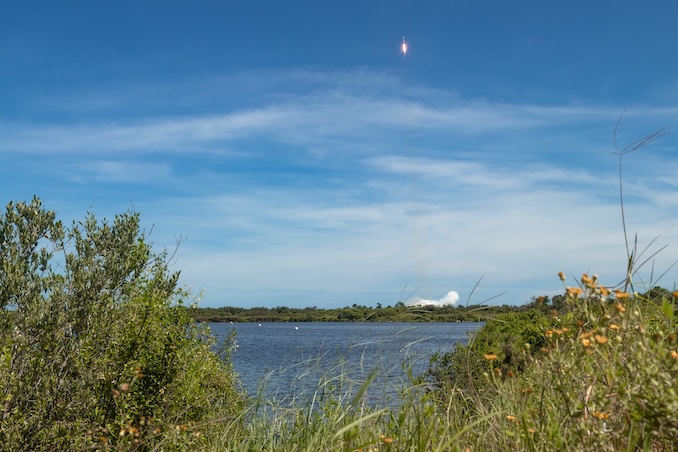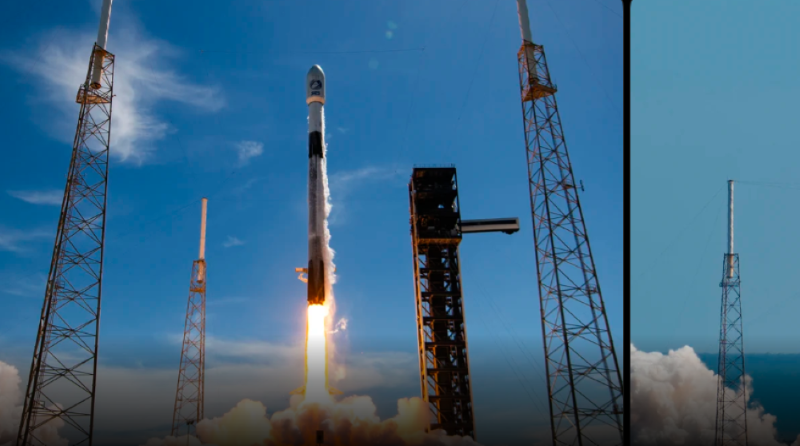
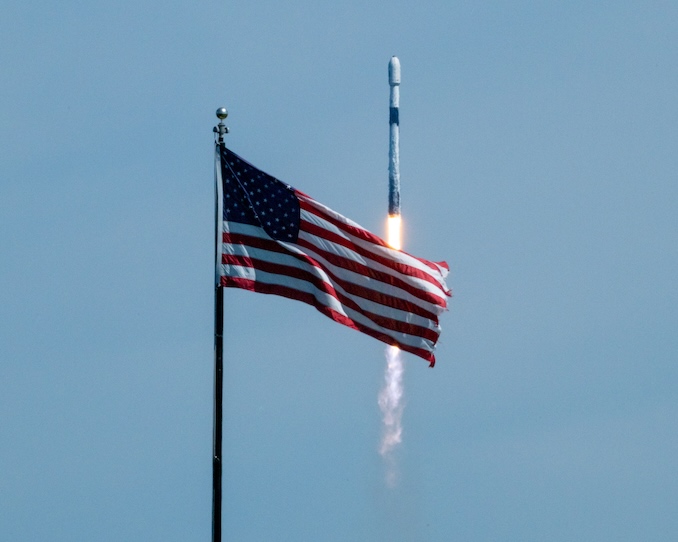
HAWTHORNE, Calif. — SpaceX notched a landmark on Sunday afternoon, launching its 700th Falcon rocket from Cape Canaveral while completing one of its oldest commercial partnerships. The Falcon 9 carried the final three O3b mPOWER satellites for operator SES, finishing a 13-spacecraft constellation in medium Earth orbit.
A Milestone Seven Hundred Flights in the Making
The tally is staggering: 700 Falcon launches to date, split between 687 Falcon 9 rockets and 13 Falcon Heavy flights. No other launch provider in history comes close to that cadence, and SpaceX built the record largely on the back of reusable boosters that fly again and again. The company's relentless flight rate has become the backbone of the commercial space economy, a pace underscored by the fleet's 103 Falcon 9 flights in 2026 alone.
Liftoff from Space Launch Complex 40 came at 2:49 p.m. EDT. The mission flew on Falcon 9 first stage B1080 on its 29th flight, a booster whose resume already included four crew and cargo runs to the International Space Station, the European Space Agency's Euclid observatory and 22 batches of Starlink satellites. Roughly eight and a half minutes after launch, B1080 landed on the droneship A Shortfall of Gravitas, marking the 661st Falcon booster recovery.
Completing the O3b mPOWER Constellation
The O3b mPOWER-F mission carried satellites F11, F12 and F13, the last three Boeing-built spacecraft needed to round out SES's next-generation broadband fleet. It was the first time three of the satellites flew together on a single rocket. The constellation now stands at 13 spacecraft delivering connectivity that ranges from tens of megabits to multiple gigabits per second anywhere on the globe.