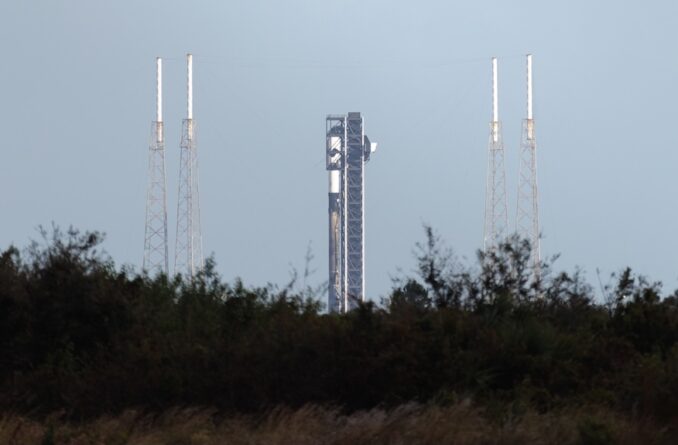
BOCA CHICA, Texas — SpaceX is pressing ahead with its relentless 2026 launch cadence, targeting another Falcon 9 flight from Cape Canaveral to deliver a fresh batch of Starlink satellites to low Earth orbit and extend a year of record-setting activity.
The mission lifts off from Space Launch Complex 40 at Cape Canaveral Space Force Station, carrying a stack of Starlink V2 Mini Optimized satellites. According to Spaceflight Now, it represents the 72nd dedicated Starlink flight of the year and, once complete, will mark SpaceX's 93rd Falcon 9 launch of 2026 — a pace no launch provider has ever matched.
A Proven Booster Flies Again
The flight showcases the reusability that anchors SpaceX's economics. The first-stage booster, tail number B1085, is flying for the 18th time, with a résumé that already includes NASA's Crew-9 astronaut mission, GPS III-7, and the Fram2 private spaceflight. About 8.5 minutes after liftoff, the booster is set to land on the droneship A Shortfall of Gravitas, stationed in the Atlantic off the coast of South Carolina.
A successful recovery would be roughly the 163rd landing on that vessel and one of well over 600 Falcon booster landings to date — routine achievements that were considered science fiction only a decade ago. This drumbeat of reuse is the same discipline that recently powered SpaceX past its 90th Falcon 9 flight of the year on earnings day.
Scaling the Starlink Network
Each launch thickens the Starlink constellation, which has become the backbone of SpaceX's commercial business. The network now serves a rapidly growing subscriber base, and the company keeps adding capacity with newer, higher-throughput satellites. That momentum was on full display when Starlink passed 12 million subscribers as revenue jumped 66%.
The V2 Mini Optimized satellites aboard this mission are designed to squeeze more bandwidth into each launch, helping SpaceX keep pace with surging demand for connectivity in homes, on aircraft, at sea, and increasingly on mobile devices through direct-to-cell service.
Cadence as a Competitive Moat
SpaceX's ability to fly this often is itself a strategic advantage. A high launch rate lets the company deploy satellites faster, refresh the constellation with new technology, and generate the cash flow that funds ambitious programs from Starship to orbital AI compute. It also keeps launch prices competitive for commercial and government customers who rely on frequent, dependable access to space.
With more than nine flights every month on average, SpaceX has turned orbital launch into something closer to an airline operation than a rare event. As the company works through a packed manifest that spans Starlink, national security payloads, and NASA science missions, the 93rd Falcon 9 of 2026 is unlikely to hold the record for long — the next one is almost always just days away.