SpaceX Plans a 1 Million-Satellite 'Starmind' Network to Run AI in Orbit

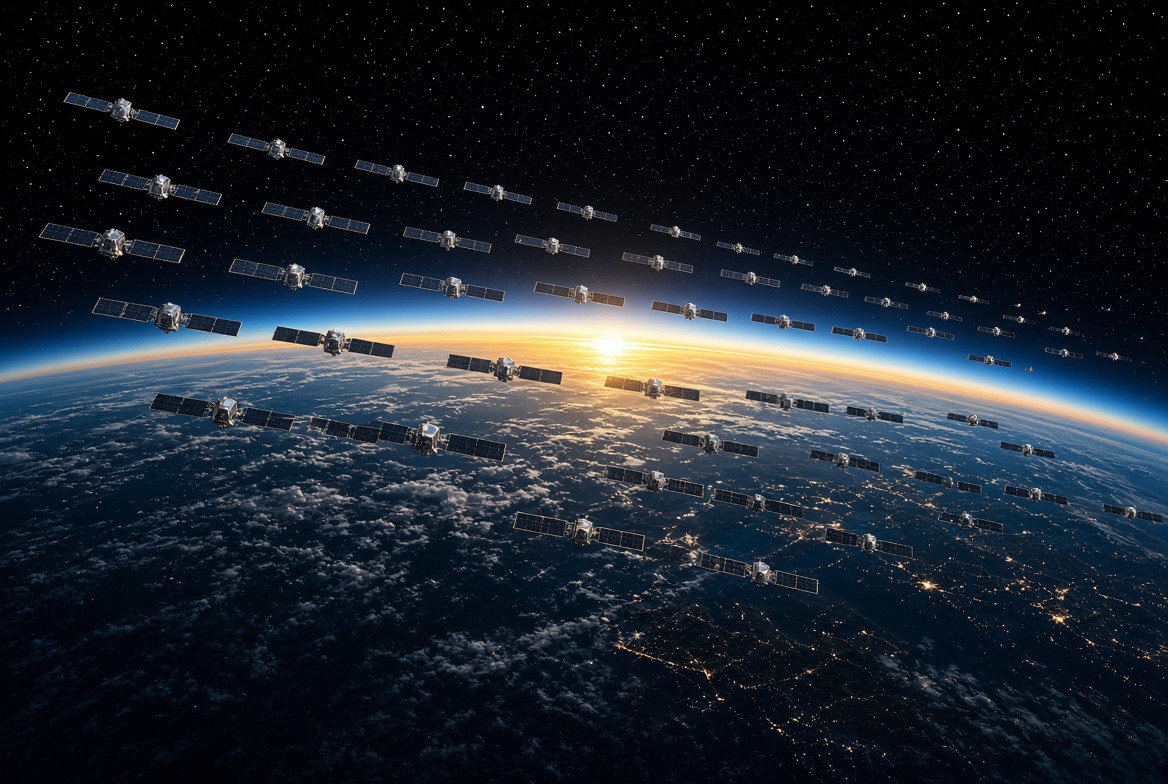
SpaceX outlined plans for up to one million heavy 'Starmind' satellites that would run AI models in orbit, with deployment set to begin from Bastrop, Texas, in late 2027.

3 min read
SpaceX Plans a 1 Million-Satellite 'Starmind' Network to Run AI in Orbit

HAWTHORNE, Calif. — SpaceX is preparing to lift artificial intelligence off the ground and into space, sketching out a constellation of up to one million "Starmind" satellites that would run AI models in orbit even as the company keeps expanding its Starlink broadband network.

The scale is remarkable even by SpaceX standards. Alongside a Starlink fleet that could grow to 100,000 spacecraft — building on the same network that recently began beaming service straight to everyday phones — the company envisions as many as one million Starmind satellites. Each could weigh up to 4,000 kilograms, nearly seven times the mass of a current Starlink V2 Mini. The first units are expected to begin deploying in late 2027 from the company's Gigasat factory in Bastrop, Texas.

Compute Clusters in Orbit

Rather than flying as isolated nodes, Starmind satellites would operate in tight formations. SpaceX vice president Michael Nicolls described clusters of roughly 10 satellites linked by about 10 terabits of bandwidth, enough to pool their processing power. "We need to operate clusters of satellites in tight formation to get enough coherent compute to run AI models efficiently," Nicolls said.

The approach fits a pattern Musk's companies have followed all year: move compute closer to abundant energy and cheap launch. With Starship driving the cost of mass to orbit sharply lower, orbiting data centers start to look less like science fiction and more like logistics — a theme analysts have tied to SpaceX's soaring valuation.

SpaceX Plans a 1 Million-Satellite 'Starmind' Network to Run AI in Orbit — additional image

A Safer, More Transparent Sky

SpaceX paired the plan with a push on orbital safety, an issue that grows more pressing as the sky fills. The company said that in 2026 Starlink encountered collision risks with about 650 unique maneuvering third-party satellites, and that only roughly half of those operators shared trajectory data. Over a recent six-month window, Starlink logged some 164,000 close-approach risks where the nearest pass fell within four hours of an unannounced maneuver.

SpaceX argued that opaque operating policies "largely only serve to create preventable collision risk between satellites," and said its autonomous collision-avoidance system would extend to the new fleet. The company laid out its reasoning in a detailed technical overview published by Teslarati.

The Road to 2027

Deployment at the scale SpaceX describes will lean entirely on Starship's launch cadence and the Bastrop manufacturing base, both still ramping toward full stride. But the ambition is unmistakable: a layer of orbital intelligence sitting above the broadband network, processing data where it is gathered and beaming the results back down.

If SpaceX hits even a fraction of a million Starmind satellites, it would hold not only the largest communications network in history but arguably the largest computer, too — one that never sleeps, passing silently overhead.

Stay Up to Date on All Things Elon

Get the most interesting Elon Musk stories straight to your inbox, once a day. Short, interesting and relevant!