
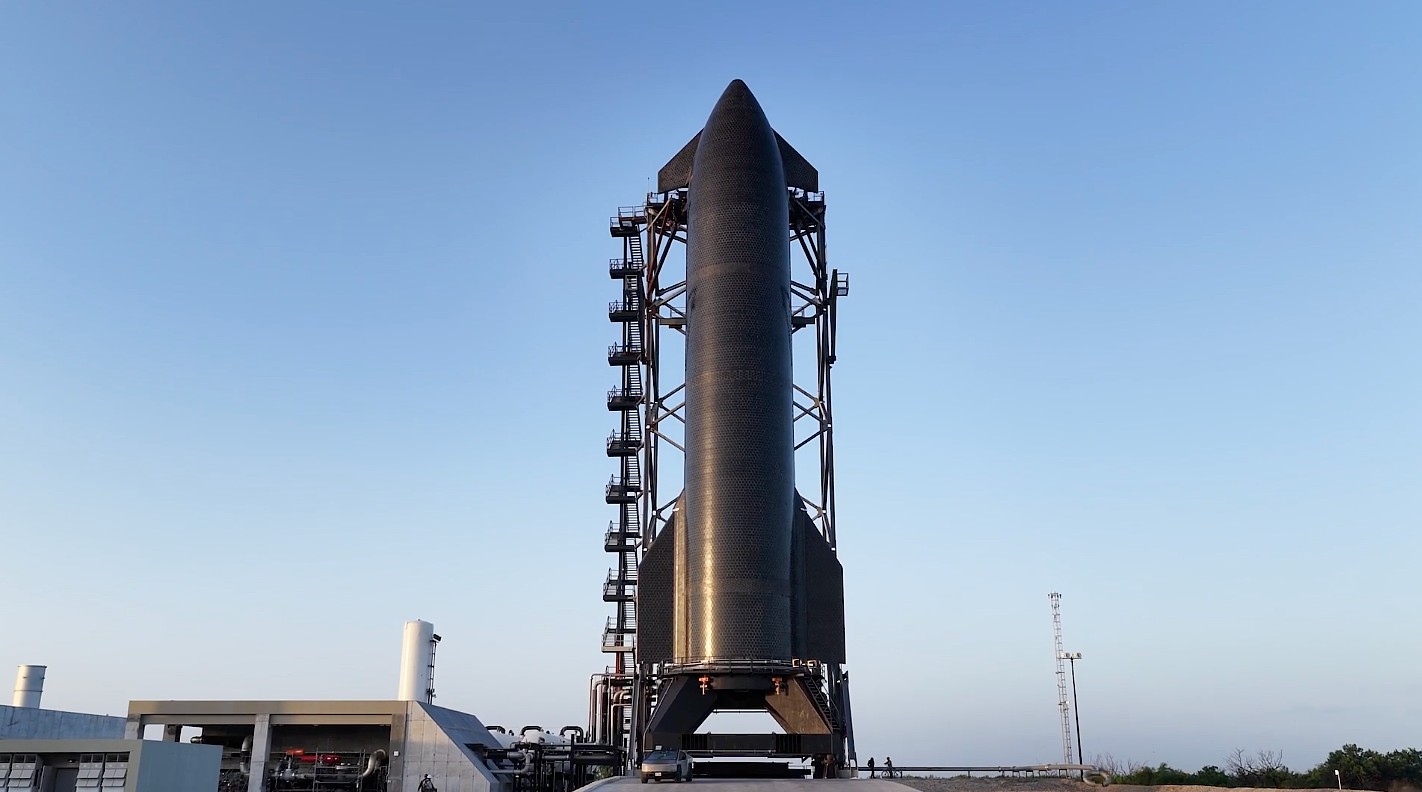
BOCA CHICA, Texas — SpaceX is preparing to turn its next Starship test into a working delivery run, with Flight 13 slated to carry the first-ever batch of next-generation Starlink V3 satellites when it lifts off from Starbase.
The company is targeting Thursday, July 23, with the launch window opening at 5:45 p.m. CDT from Pad 2 in South Texas. It would be the second flight of the current Block 3 Starship and Super Heavy, powered by the reworked Raptor 3 engine, and it follows a July 16 attempt that was halted after four of the booster's 33 engines failed to ignite. Elon Musk said two engines were swapped ahead of the next try — a quick turnaround consistent with the aggressive cadence outlined when SpaceX set Thursday as its target after upgrades.
A Real Payload, Not a Simulator
What sets this flight apart is the cargo. For the first time, Starship will deploy 20 operational Starlink V3 satellites rather than mass simulators. The V3 generation is a major leap, with laser inter-satellite links, deployable solar arrays and antennas, and roughly ten times the capacity of today's V2 Mini hardware — a step-change meant to expand both the network's throughput and the speeds users see.
After deployment, the satellites are planned to extend their arrays and antennas and attempt to link up with ground stations in South Africa and the wider Starlink constellation via high-capacity lasers. It is the same optical-mesh technology already being pushed to new frontiers in efforts like beaming NASA's Artemis III in 4K.


