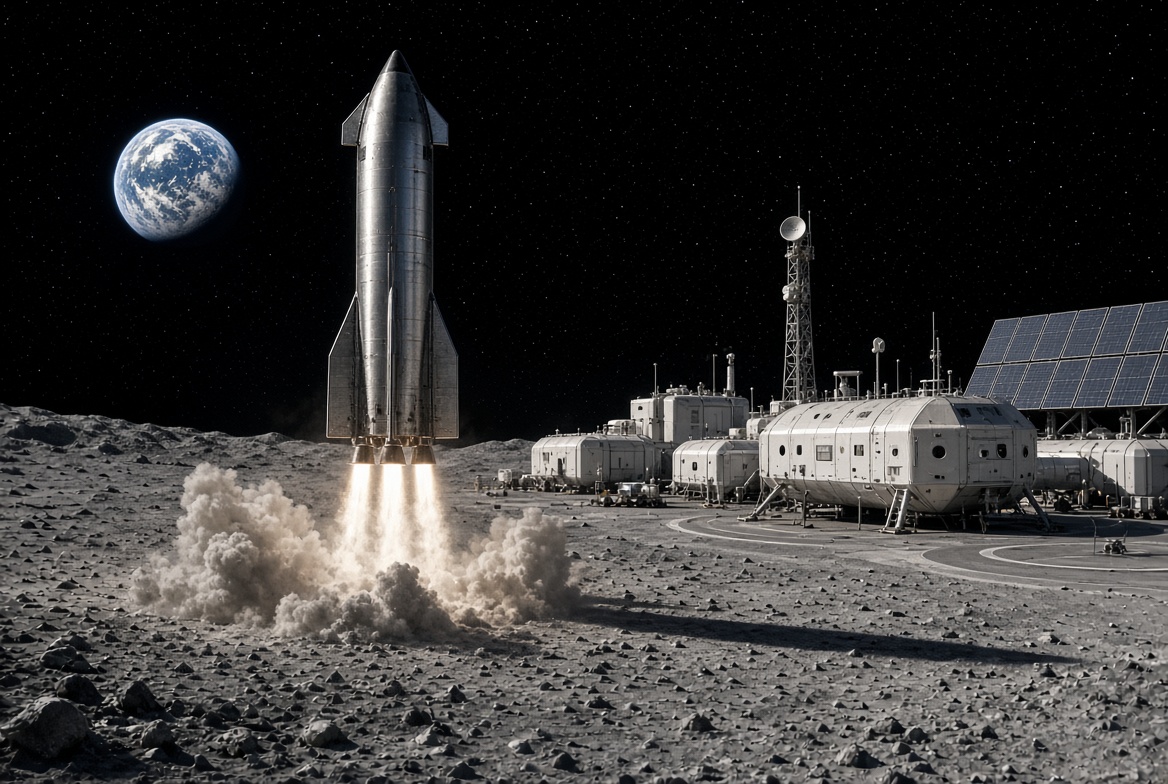
BOCA CHICA, Texas — Elon Musk is pushing back on the idea that landing astronauts on the Moon will require a daunting fleet of Starship launches. After a NASA safety panel floated an estimate of roughly 22 flights, Musk said on X that the figure is "way too high," adding that the "actual number will be more like 6 to 8." For a program built on reusability and rapid iteration, that gap is more than a math dispute — it is a statement of confidence.
The debate traces to the way Starship reaches deep space. Because the vehicle burns nearly all of its propellant just getting to orbit, SpaceX plans to refuel it there: a propellant depot launches first, tanker Starships top it off, and the lunar lander fills up before heading to the Moon. Each tanker is a full launch, so the total count drives cost, schedule, and complexity. SpaceX has already shown it can fly the system aggressively, including the recent first revenue flight that deployed Starlink V3 satellites.
Where the Numbers Diverge
At its quarterly public meeting, NASA's Aerospace Safety Advisory Panel flagged in-orbit refueling as a key risk for Artemis IV, the mission slated to land crew on the Moon in 2028. Panel member and former astronaut Charlie Precourt said "the last estimate is around 22 flights." That assumption appears to lean on Starship's current lift capacity.
Musk's far lower figure assumes the upgraded V3 Starship, a taller, more powerful vehicle engineered to carry far more propellant per flight. Fewer, bigger tanker runs mean a depot fills faster — and the refueling architecture the whole plan depends on becomes dramatically more efficient.
