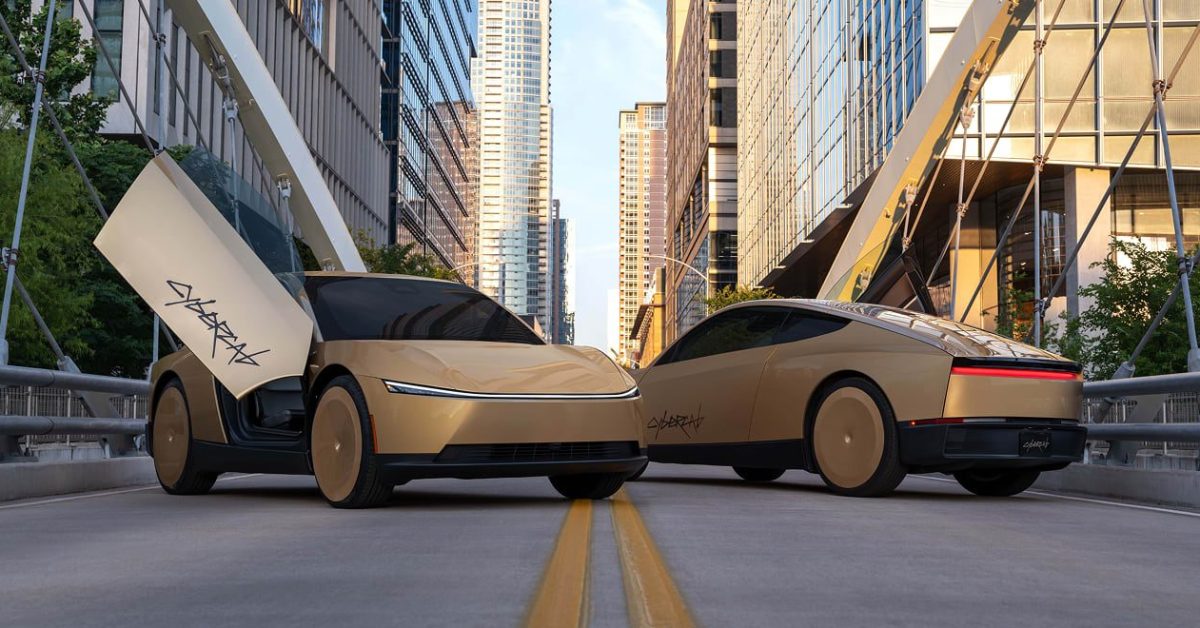
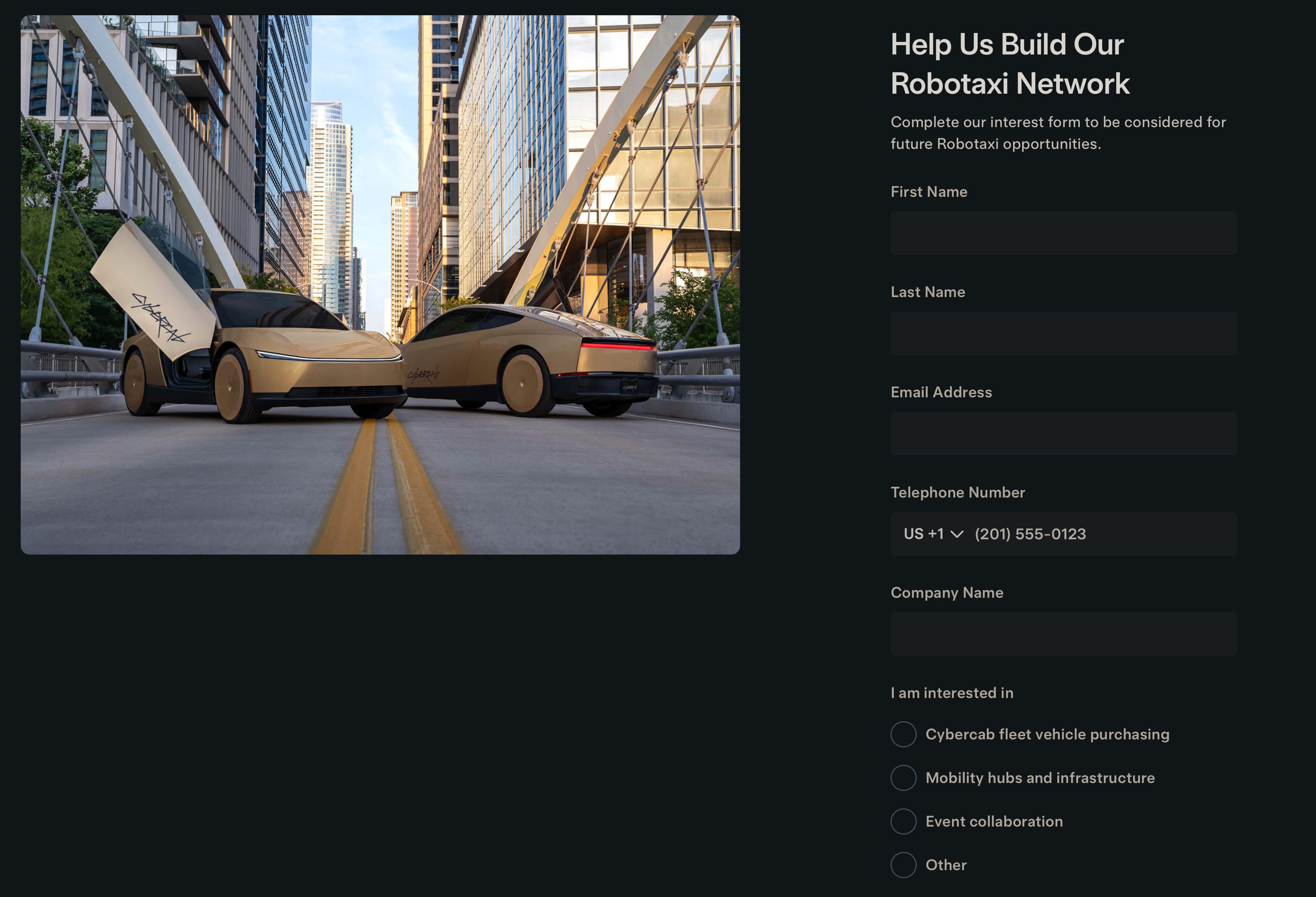
AUSTIN, Texas — Tesla is throwing open the doors of its Robotaxi network to the business world. Alongside this week's launch of public Cybercab rides in Austin, the company quietly rolled out a Robotaxi interest form inviting outside companies to buy Cybercab fleets, build charging and mobility hubs, and collaborate on the infrastructure that will carry autonomous ride-hailing across the country.
The form, headed "Help Us Build Our Robotaxi Network," lets businesses signal how they want to participate: purchasing Cybercab fleet vehicles, developing mobility hubs and infrastructure, event collaboration, or other partnerships. It is the clearest signal yet that Tesla is ready to move its self-driving platform from a Tesla-owned pilot into a much larger commercial ecosystem.
From pilot to platform
Tesla has spent the past year proving the Robotaxi concept with its own vehicles, and the results have been striking. The company recently confirmed its driverless fleet had crossed a major mileage milestone, a figure detailed in our report on how Tesla Robotaxi passed 1 million unsupervised miles. Opening fleet ordering to outside operators is the logical next step: it lets Tesla scale the number of cars on the road far faster than it could by financing every vehicle itself.
For fleet operators, taxi companies and logistics firms, the pitch is compelling. A purpose-built two-seat autonomous vehicle with class-leading efficiency and no driver cost could reshape the economics of urban mobility. Businesses that get in early stand to help define how the network grows in their own regions.
Mobility hubs and infrastructure
The interest form also asks about "mobility hubs," a nod to the charging and staging infrastructure a large driverless fleet will need. Rather than build every depot alone, Tesla is inviting partners with real estate, energy and operational expertise to help stand up the backbone of the network. That collaborative approach mirrors how Tesla scaled its Supercharger footprint, and it could dramatically accelerate deployment in new cities.
The timing lines up with a busy week in Austin, where the company began offering public rides in its steering-wheel-free Cybercab, as covered in our story on how Tesla launched Cybercab public rides in Austin. With the vehicle now carrying paying passengers, lining up commercial demand is a natural parallel track.
A network effect in the making
What makes the move powerful is the flywheel it sets up. Every fleet operator that signs on adds cars, coverage and data to the network, which in turn makes the service more useful and more attractive to the next partner. Interested companies can register directly through Tesla's official Robotaxi interest page, which collects region preferences and the role each business wants to play.
Tesla has long argued that autonomy would eventually let it run a transportation-as-a-service business at enormous scale. By formally inviting outside capital and operators into that vision, the company is signaling confidence that the technology is ready for prime time. If the interest translates into orders, the Cybercab could go from a single-city novelty to a nationwide fleet far faster than skeptics expect — and the businesses lining up today may well be the operators shaping the driverless decade ahead.