AUSTIN, Texas — Tesla has quietly made its already-rugged Cybertruck tougher, swapping the pickup's underbody panels from aluminum to carbon fiber in a running hardware change that improves durability while cutting weight and cost.
Cybertruck lead engineer Wes Morrill confirmed the update after the new material was spotted by an eagle-eyed observer. "Testing showed it to be more durable than the aluminum while being lower weight and cost," Morrill wrote on X, adding that the change also brings a "slight efficiency improvement since we can better form the areas around the bolts to keep the underbody airflow cleaner than what stamped aluminum allows."
A Stronger Skid Plate for a Tougher Truck
Underbody panels protect the Cybertruck's battery pack and critical components from road debris and impacts. Tesla had used aluminum for that job since the truck's first deliveries began ramping in 2023, but after testing several materials, engineers found carbon fiber performed better. The change was first seen on a Cyberbeast, but Tesla is applying it across all trims to keep supply-chain efficiency high and reduce variation between configurations.
Carbon fiber is traditionally lighter and stronger than aluminum, which is why luxury automakers and EV makers prize it — often using it around battery packs to save weight. This marks the first time Tesla has used carbon fiber on the Cybertruck's exterior structure specifically to enhance strength and performance, as Teslarati reported.
Building on a Safety Reputation
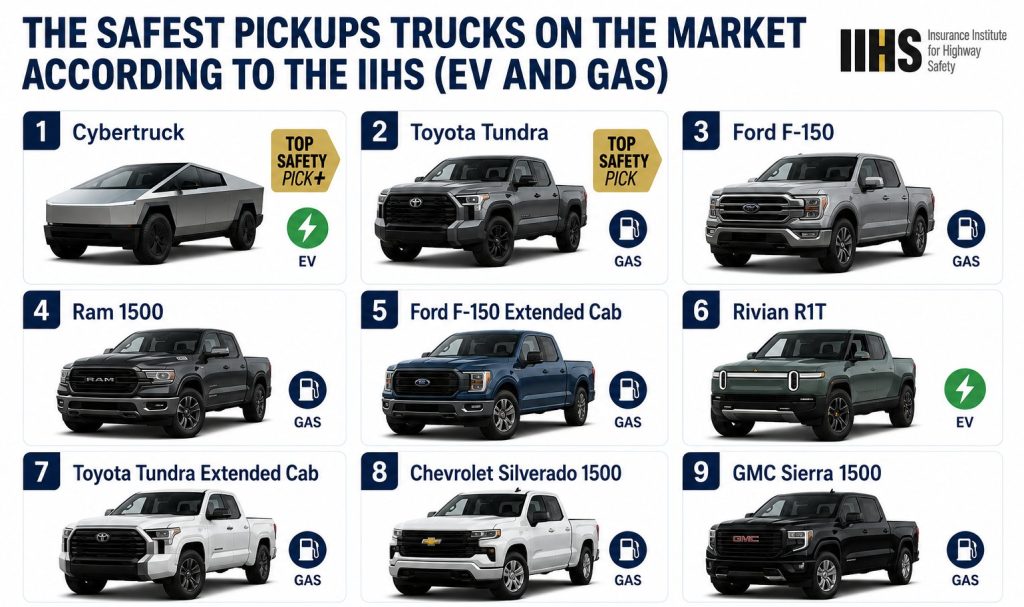
The upgrade extends a durability story Tesla has leaned on since the Cybertruck was unveiled, when its stainless-steel exoskeleton and resistance to dents, dings and even gunfire became core selling points. Earlier this year, the Insurance Institute for Highway Safety named the Cybertruck the only full-size pickup to earn its Top Safety Pick+ award, citing strong crash performance and a front-crash-prevention system that avoided every pedestrian collision in testing.
Carbon-fiber underbody panels reinforce that positioning while shaving mass — a meaningful gain for an EV, where every kilogram removed helps range and efficiency. The lighter panels also let engineers clean up airflow beneath the truck, a small but real aerodynamic win that complements Tesla's continuous software improvements, including the latest Full Self-Driving updates flowing to Cybertruck owners.
Constant Iteration
The switch is characteristic of how Tesla builds. Rather than freezing a design at launch, the company folds engineering improvements into production on a rolling basis, so later units often benefit from lessons learned on earlier ones. That approach has steadily refined the Cybertruck's structure, cost and efficiency since it entered the market.
For buyers, the practical takeaway is straightforward: the newest Cybertrucks roll off the line a little lighter, a little more efficient and, according to Tesla's own testing, even more durable than the trucks that came before them. It is a small change with an outsized message — that even Tesla's toughest vehicle is still getting better with every build.