LIVELIVERobotaxi
Rollout
,robotaxis
  • TexasCybercab126Model Y420Driverless
  • Miami, FLUndisclosedDriverless
  • Orlando, FLUndisclosedDriverless
  • Tampa, FLUndisclosedDriverless
  • Bay Area, CAModel Y1,655Safety driver
  • Las Vegas, NVUp to 5,000Approved
  • Phoenix, AZPreparingComing soon

SpaceX Set for Starship's First Orbital Flight Tuesday

SpaceX is targeting September 22 for Starship Flight 14, its first-ever attempt to reach orbit, carrying next-generation Starlink V3 satellites on a roughly 10-hour mission.

3 min read
SpaceX Set for Starship's First Orbital Flight Tuesday

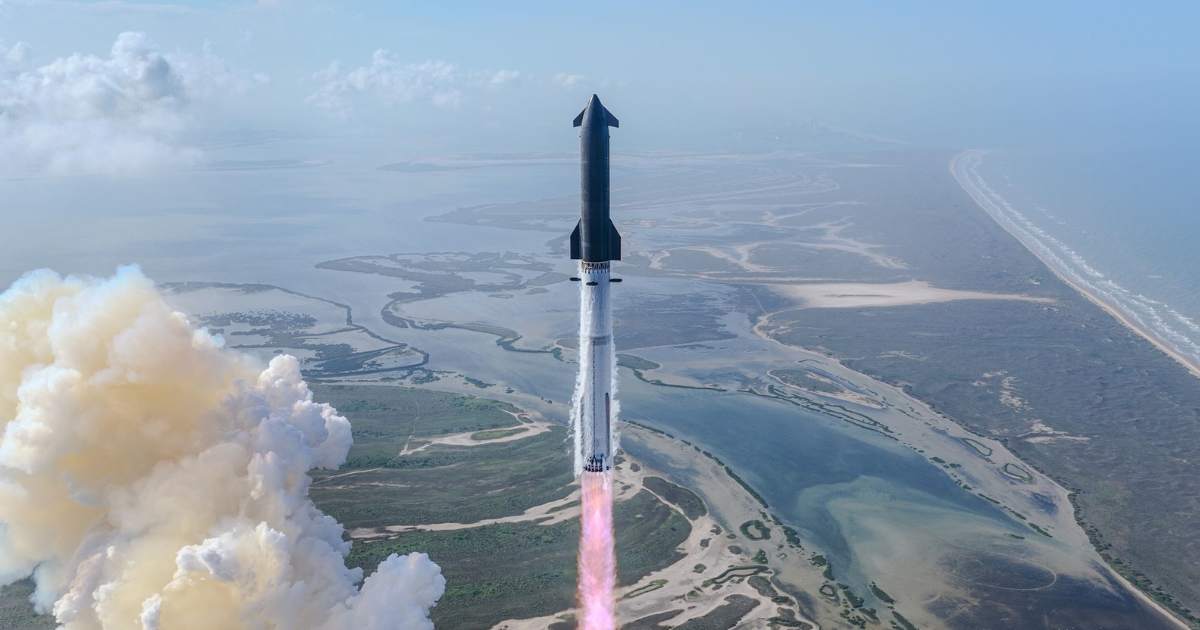
BOCA CHICA, Texas — SpaceX is poised to make history on Tuesday, targeting September 22 for Starship's 14th test flight — and its first-ever attempt to reach orbit. After 13 suborbital missions, the world's most powerful rocket is finally set to circle the planet, a milestone that would move the program from proving ground to operational launch system.

From suborbital arcs to real orbit

Every previous Starship mission intentionally flew a suborbital arc, reentering within the same hour it launched so engineers could gather data while limiting risk. Flight 14 changes that. The launch window opens at 7:15 a.m. Central time at Starbase in South Texas and runs for 75 minutes. If all goes to plan, Starship will circle Earth roughly six times at an altitude near 275 kilometers over about ten hours before a deorbit burn sends it toward a splashdown in the Pacific Ocean west of Chile.

The flight also carries a working batch of next-generation Starlink V3 satellites — the leap in satellite capacity SpaceX has been preparing to deploy. Each V3 satellite is rated for roughly one terabit per second of downlink capacity, so a successful deployment would mark the single largest jump in Starlink's network bandwidth since the constellation began flying on Falcon 9.

Confidence earned in July

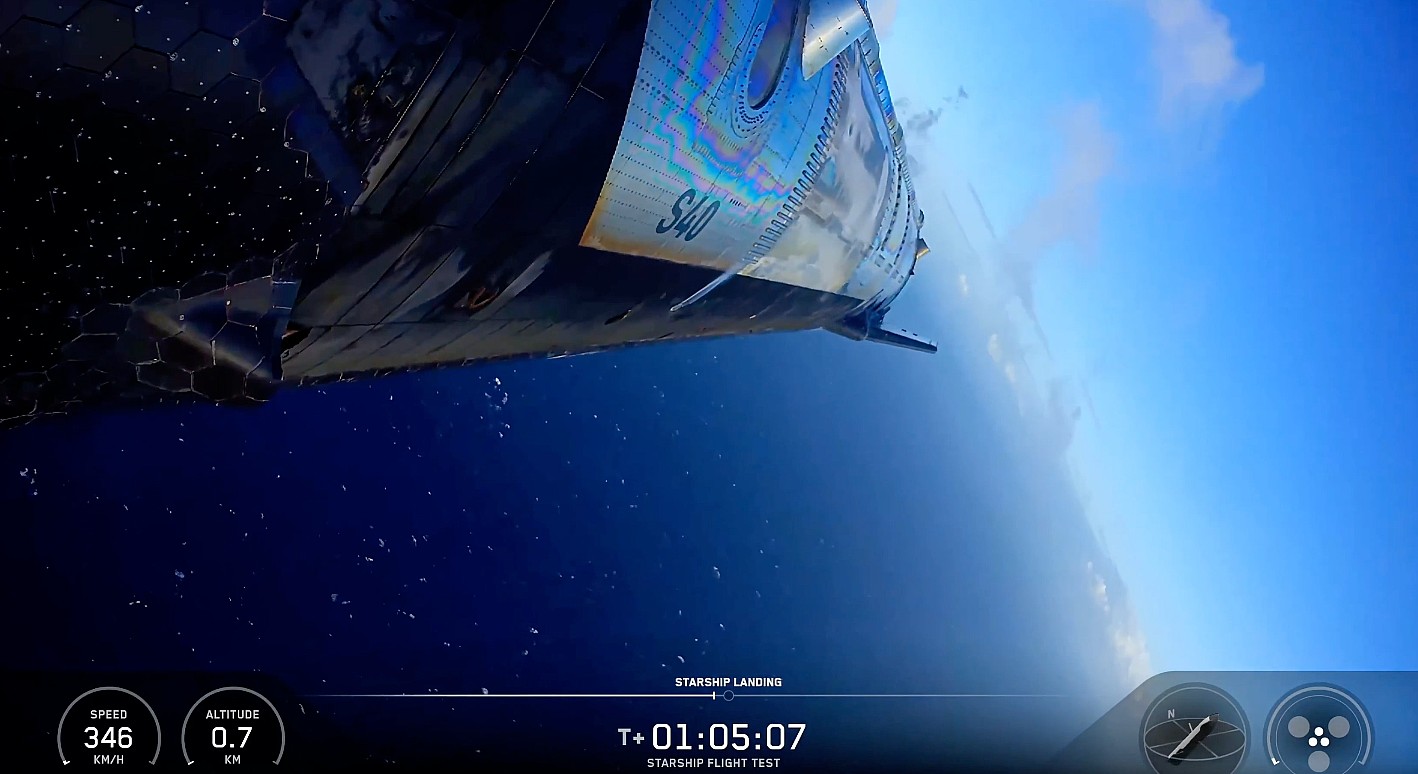
SpaceX heads into the attempt with momentum. As Teslarati reported, Flight 13 in July flew a deliberately punishing reentry profile to stress-test Starship's heat shield, and the ship survived its softest splashdown yet — intact enough for drone inspections afterward. Musk said that flight delivered "all the heat shield data we needed and then some," and Flight 14 is where the company starts spending that hard-won confidence on an actual orbital insertion.

SpaceX Set for Starship's First Orbital Flight Tuesday — additional image

The Super Heavy booster will still aim for a controlled offshore landing, though SpaceX is holding off on a tower catch of the ship this time. The measured, data-driven cadence is vintage SpaceX: prove one hard thing at a time, then build on it.

A launch system taking shape

Reaching orbit would be far more than a symbolic win. It transforms Starship from a test article into a vehicle capable of carrying paying payloads — and eventually people. It also feeds directly into SpaceX's broader momentum across its business, from a booming launch manifest to a deepening role with NASA underscored by its recent $950 million award for three more crewed Dragon flights.

SpaceX has cautioned that September 22 is a target, not a locked date, and Starship schedules have slipped before over hardware readiness and regulatory sign-off. But the plan itself is the clearest marker yet that Starship is crossing the threshold from experiment to workhorse. If Tuesday goes as designed, the rocket built to make humanity multiplanetary will have taken its biggest step yet — and Starlink customers around the world will be among the first to feel the benefit.