AUSTIN, Texas — Tesla's Full Self-Driving software is about to get personal. Elon Musk confirmed on July 18 that upcoming versions of FSD will remember an individual driver's interventions and adapt to match each person's preferences, marking a shift away from the uniform behavior that has defined the fleet until now.
The comment came in reply to a Tesla owner on X who complained that FSD sometimes exits a carpool or express lane only to get stuck in slower traffic. "The car will start to remember your specific interventions and match each person's individual preferences," Musk wrote. It is a small sentence with big implications for how millions of Teslas will drive.
From One Model to Many Styles
Until now, every Tesla running FSD has essentially tried to drive the same way, trained on a single generalized model of good driving. Human drivers are not so uniform. The clearest example is parking: some owners back in, others pull through, and some prefer the closest spot while others happily circle for the ideal one.
Under the new approach, FSD would be trained on a range of behaviors and then observe how a specific owner drives, matching itself to the closest style. That builds on Musk's earlier teasing that FSD would soon mirror an owner's parking habits at everyday locations like home, the office, or a child's school.
Turning Interventions Into Training Data
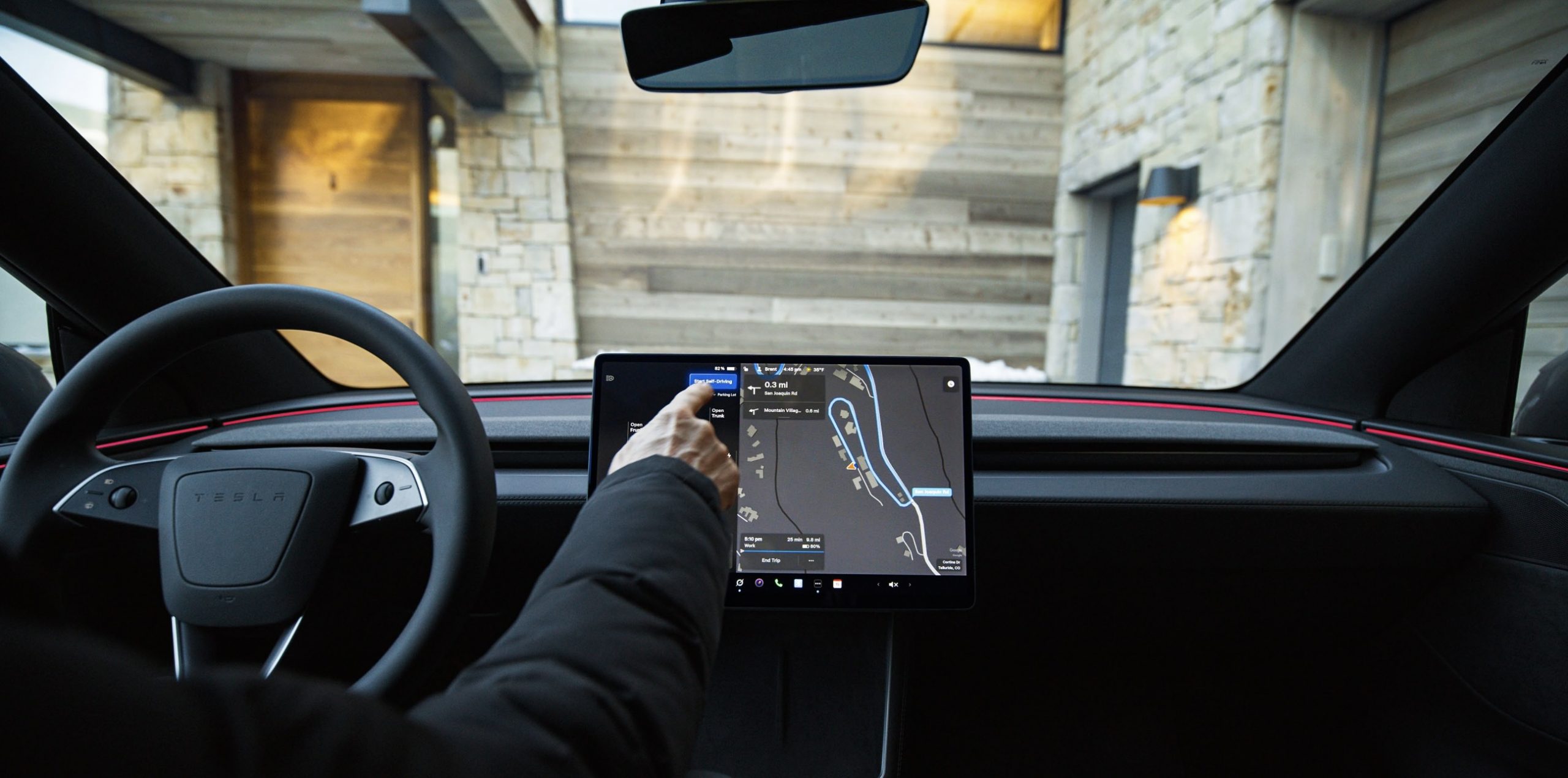
The personalization effort leans on Tesla's existing feedback loop. The company recently introduced a persistent disengagement menu that appears each time a driver takes over, and that data helps Tesla identify which interventions to target first. Parking is by far the most common cause of disengagements, so it is expected to improve earliest.
If FSD can consistently nail a home-garage park down to a driver's preferred orientation and spacing, and learn the right spot in an apartment complex, owner takeovers should fall sharply. Tesla's internal data already shows FSD is more energy efficient than human drivers; teaching it to also respect personal preferences narrows the gap between a capable system and one drivers fully trust.
A Foundation for What Comes Next
The timing fits Tesla's broader autonomy push, coming just days after the company confirmed that a driver, not FSD, was responsible in a closely watched Texas crash investigation. Musk did not give a rollout window, saying only that the features are coming. Tesla is expected to launch the next major branch of consumer FSD, version 15, later this year or early next, reportedly with a roughly 10x jump in model parameters.
Musk's full remarks on X suggest personalization will roll out gradually, most likely starting with parking before expanding to lane choices and other everyday decisions. For owners, the promise is simple and appealing: a car that not only drives well, but increasingly drives the way you would.