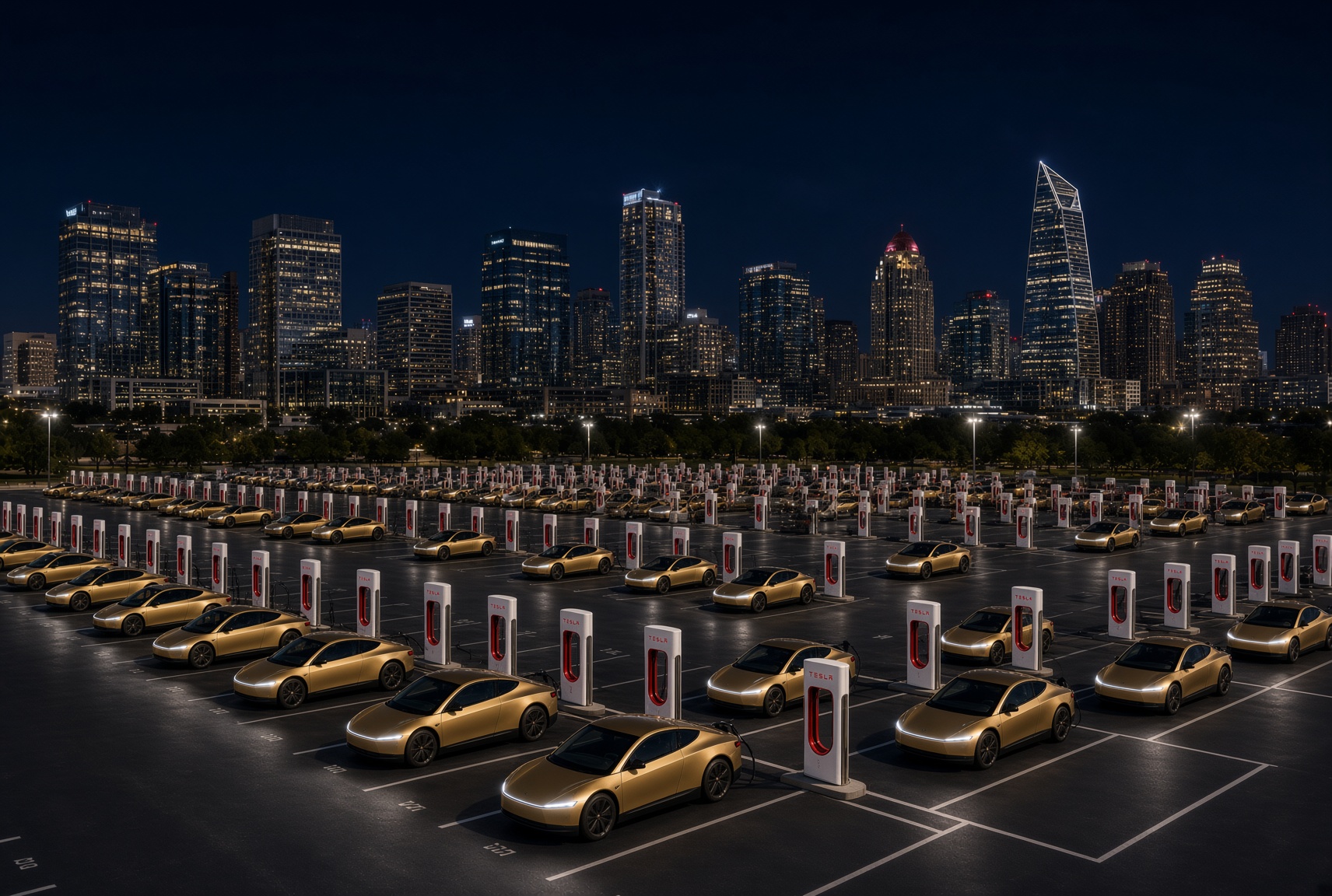
AUSTIN, Texas — Tesla is building out the charging backbone for its growing driverless fleet, filing permits for a large Robotaxi charging hub in Austin that would begin with 48 dedicated Superchargers and eventually add dozens of wireless induction stalls.
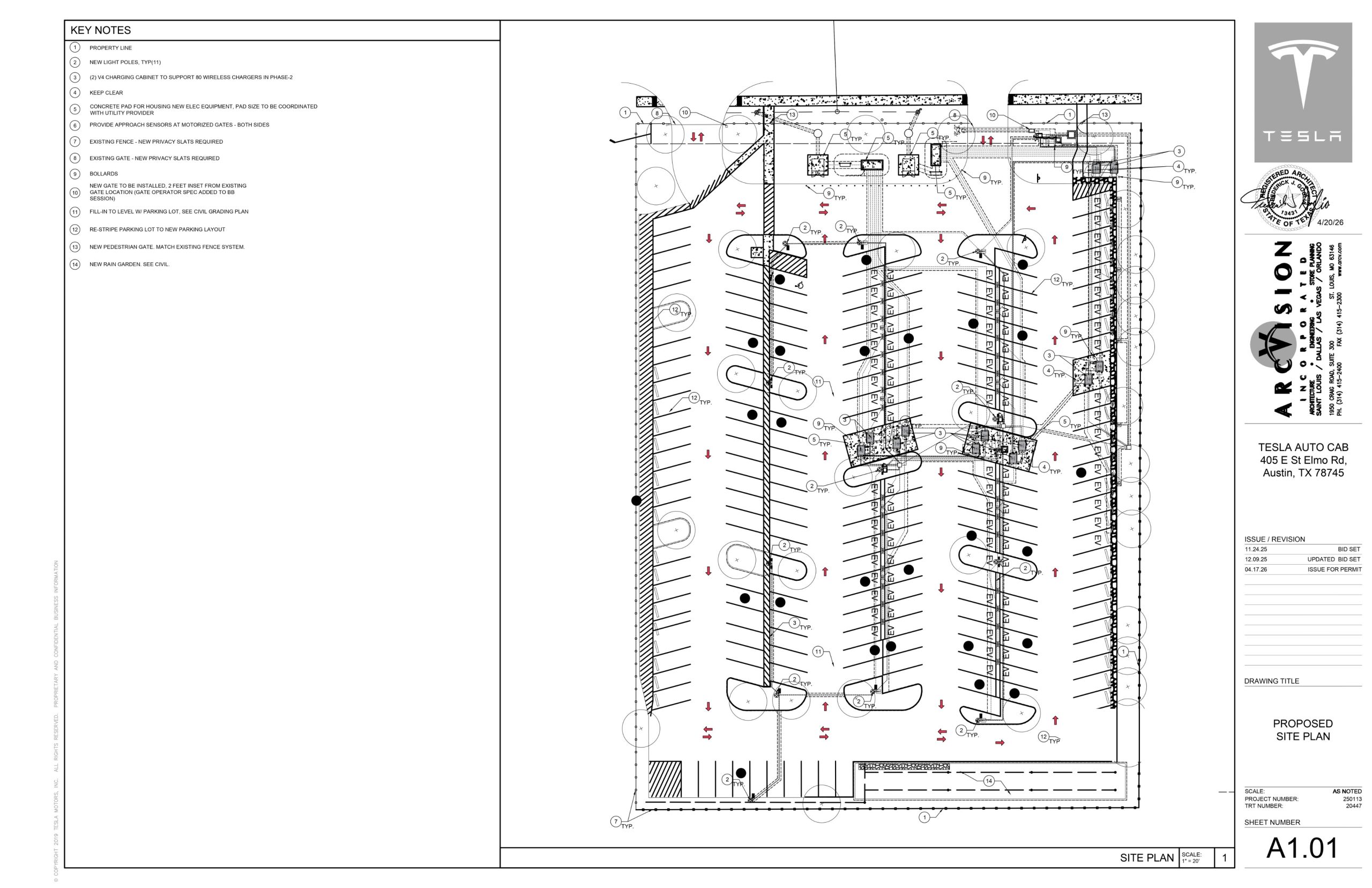
The plans, revealed through city permit submissions, call for 48 Robotaxi-geared V3 Superchargers on a lot directly across from Tesla''s St. Elmo service center in south Austin. The filing lists roughly 80 additional spaces that a later phase would convert into wireless charging — a technology Tesla has been developing specifically so its Cybercab fleet can top up without a human plugging in. The hub arrives just as Tesla ramps toward the public launch of its Cybercab in the city.
Purpose-Built for Driverless Fleets
Conventional Superchargers are designed for owners who pull in, plug in and leave. A Robotaxi fleet needs something different: high-throughput depots where autonomous vehicles can route themselves to an open stall, charge and return to service with no driver involved. The 48-stall first phase is engineered for exactly that kind of continuous, unattended cycling, with the lot holding roughly 128 total spaces once fully developed.
The second phase is the eye-catcher. Permit notes reference a cabinet built "to support 80 wireless chargers," pointing to inductive charging pads that would let a Cybercab — which has no steering wheel, pedals or charge port a person would reach for — recharge simply by parking over a pad. Wireless charging has long been on Tesla''s roadmap, and a dedicated Robotaxi depot is a logical first place to deploy it at scale.